

Product Description
About the Walnut (Akhrot) Plant
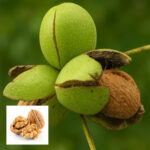
Walnut, known as Akhrot in India, is a deciduous nut tree (Juglans regia) prized for its rich, oil-dense kernel inside a hard, deeply grooved shell. Traditionally associated with the Kashmir valley and the cooler hill regions of Himachal Pradesh and Uttarakhand, grafted walnut varieties have made it possible to grow this valuable nut tree in a wider range of Indian gardens than seed-grown trees ever allowed.
Learn more about Walnut on Wikipedia.
Appearance & Flavour
The tree has attractive compound leaves and develops a broad, spreading canopy as it matures. The nut forms inside a green outer husk that splits away as it ripens, revealing the familiar hard shell. Inside, the kernel is rich and buttery with a mild bitterness, prized both eaten fresh and used throughout Indian and international cooking and baking.
Growing Conditions in India
Walnut trees generally prefer a defined winter chill period to fruit reliably, which is why they have traditionally been grown in northern hill regions. Grafted varieties are more forgiving of warmer winters than seed-grown trees, widening the range of gardens where a productive walnut can realistically be planted. The tree wants full sun and deep, well-drained soil to develop its extensive root system.
Planting Guide
Allow generous space, at least 6-8 metres, for a mature walnut tree’s eventual canopy and root spread. Choose an open, sunny position away from other large trees, and enrich the planting hole with organic matter to support strong early root development.
Watering & Feeding
Water deeply and regularly while the tree is young and establishing, then reduce frequency once it matures, as an established walnut tolerates moderate dry spells reasonably well. Feed with organic compost or manure once or twice a year to support steady growth and nut development.
Pruning & Common Problems
Prune during the dormant season to remove crossing or damaged branches and keep an open canopy shape that lets light reach developing nuts. Walnuts are relatively low-maintenance once established, with good drainage at planting time being the most effective step against root problems.
Harvest & Culinary Uses
Being grafted, this tree typically begins bearing nuts considerably sooner than a seed-grown walnut, which can take many years and give unpredictable results. Nuts are ready once the green outer husk begins to split and darken. Crack and eat fresh, or dry for longer storage; walnuts are used throughout Indian sweets, salads, and everyday cooking.
Frequently Asked Questions
How long does a grafted walnut tree take to bear nuts?
Typically within 4-6 years of planting, considerably sooner than a seed-grown tree.
Can walnut be grown outside traditional hill regions?
Grafted, lower-chill varieties have widened where walnut can be grown, though it still performs best with some winter chill.
How large does a mature walnut tree get?
It develops into a substantial shade tree over the years, so it needs generous open-ground space rather than a container.
Is walnut a good tree for a home orchard?
Yes, a single healthy tree can produce a useful annual nut harvest once established, alongside valuable shade.
Related Plants You Might Like
Explore more Dryfruit Plants from Green Glow Nursery, including the Sweet Almond Plant and Diana Anjeer – Exotic Plant.
A Full Care Routine for Walnut (Akhrot) Plant
Everything starts with the potting mix. Garden soil alone turns hard and airless in a container, so give Walnut (Akhrot) Plant a proper blend built for drainage and steady moisture rather than soil alone — our potting mix guide has three recipes that work well across our range, along with tips for planting in open ground.
Watering is one habit worth getting right: water generously through the warm months, then pull back sharply as growth slows in winter. Checking the soil before watering, rather than watering on a fixed schedule, helps prevent one of the most common causes of lost container plants. Our watering guide covers the routine in full, with a simple test you can apply to Walnut (Akhrot) Plant straight away.
Feed little and often through the growing season using a balanced organic fertiliser, tapering off as growth slows for the year. Our fertiliser guide breaks this down by season so you always know what Walnut (Akhrot) Plant needs next.
Monsoon brings its own risks for a potted fruit plant — mainly waterlogging and the fungal problems that follow when a pot cannot drain fast enough through days of continuous rain. Raising the pot slightly off the ground and checking that drainage holes are clear before the rains set in prevents most of the damage we see every year. Our monsoon care guide covers the full pre-monsoon checklist.
Why Choose a Grafted Walnut from Green Glow Nursery
Grafting brings reliable walnut production within reach of far more Indian gardens than seed-grown trees ever could. Every plant is nursery-raised and delivered across India with our standard health guarantee.
What's inside the Box?
- 1 live plant, root ball intact
- Nursery bag with growing media
- Care and planting instructions
You may also like
 29% OFF
 29% OFF
 26% OFF
Customer Reviews
 Nikhil
Delivers excellent fruit quality and consistent yield every season.
