
Product Description
About the Sweet Almond Plant
Sweet Almond (Prunus dulcis) is native to the Middle East and Central and South Asia, grown for thousands of years for its edible kernel — the almond nut — hidden inside a hard shell within a fuzzy outer hull. Before any of that develops, the tree puts on a striking early spring display of pale pink and white blossoms, closely related in appearance to peach and other stone-fruit flowers, since almond belongs to the very same genus.
Learn more about Almond on Wikipedia.
Appearance & Flavour
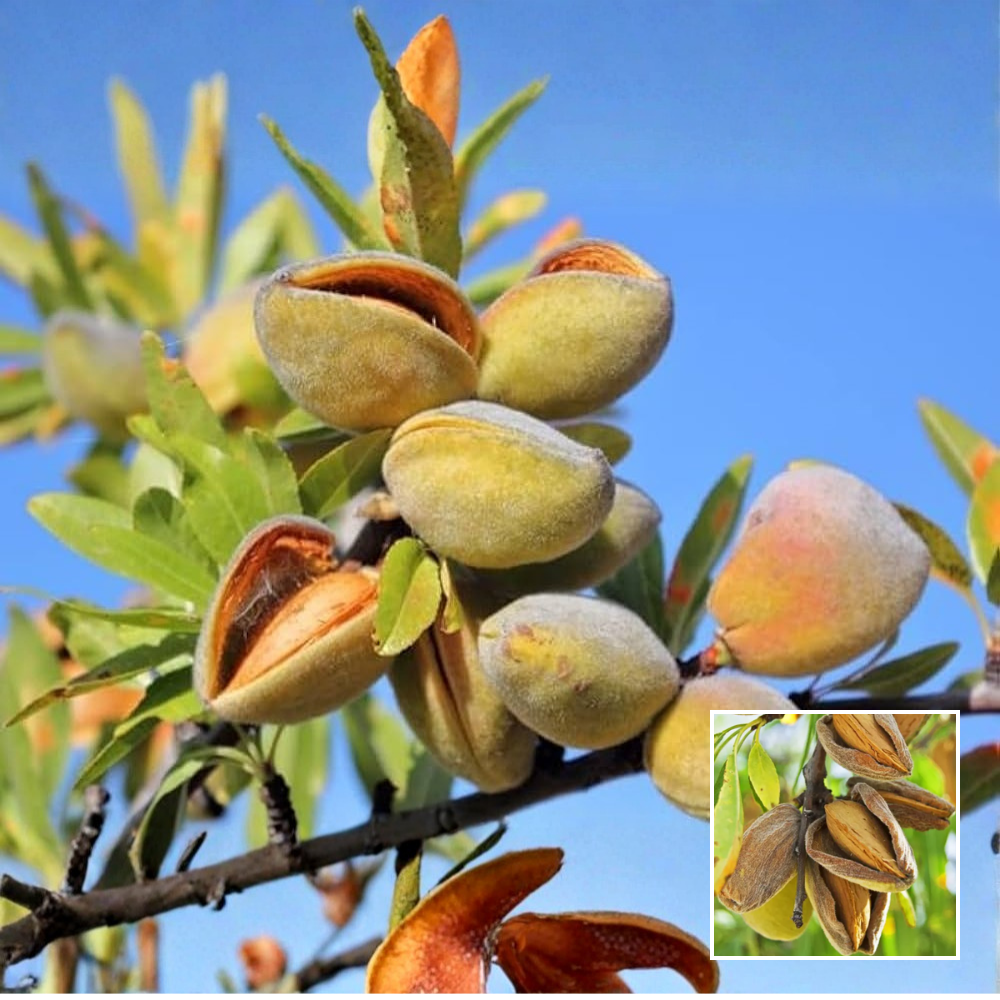
The tree is a moderately sized deciduous plant with narrow, willow-like leaves, producing masses of five-petalled blossoms along bare branches before leafing out each spring. The fruit itself looks like a fuzzy, elongated green pod rather than a fleshy fruit; inside, a hard shell protects the familiar almond kernel, which has a rich, slightly sweet, distinctly nutty flavour once dried.
Growing Conditions in India
Almonds traditionally need a defined winter chill to flower reliably, which is why they are historically associated with regions like Kashmir and parts of Himachal Pradesh. Grafted varieties suited to warmer conditions widen where almonds can realistically be grown. The tree wants full sun and deep, well-drained soil, and is genuinely drought-tolerant once its roots are well established, unlike many other fruiting trees.
Planting Guide
Allow 4–5 metres of space in open ground for a mature almond tree, in a position with full sun and good air circulation. Enrich the planting hole with organic matter, and stake young trees against wind until their root systems are well developed and self-supporting.
Watering & Feeding
Water deeply and regularly while young, then reduce frequency as the tree matures — established almond trees handle dry spells considerably better than most fruiting trees in this catalogue. Annual dormant-season pruning keeps the canopy open for better airflow and more even nut development across the tree.
Pruning & Common Problems
Prune during the dormant season to remove crowded or crossing branches and maintain an open shape. Almonds are relatively resilient once established, though like other stone fruits they can occasionally be affected by leaf curl in humid conditions, manageable with a preventive copper-based spray during dormancy.
Harvest & Culinary Uses
Being grafted, this tree bears nuts years earlier than one grown from seed, which is notoriously unreliable for both timing and nut quality in almonds. The hull splits open when the nut is mature, revealing the hard shell and edible kernel inside. Harvest once hulls begin to split, then dry and crack for the classic almond eaten fresh, roasted, or used throughout cooking and baking.
Frequently Asked Questions
How long does a grafted almond tree take to bear nuts?
Typically within 3–4 years of planting, considerably sooner than the many years a seed-grown almond tree can take, if it produces good nuts at all.
Can almonds be grown outside traditional cold regions like Kashmir?
Yes, grafted low-chill varieties have made it possible to grow almonds successfully across considerably warmer parts of India than was traditionally possible.
Are almond tree blossoms similar to peach blossoms?
Yes, since almond and peach belong to the same genus, their spring blossoms look remarkably similar, both offering excellent ornamental value.
Is almond a drought-tolerant tree?
Once established, yes — almonds handle dry conditions notably better than many other fruiting and nut trees.
What is the difference between sweet almond and bitter almond?
Sweet almond, the type grown here, is the safe, edible kind used in everyday cooking and snacking, while bitter almond contains compounds that make it unsuitable for eating without special processing.
Related Plants You Might Like
Explore more Dryfruit Plants from Green Glow Nursery, including the Diana Anjeer – Exotic Plant and Walnut (akhrot) – Grafted Plant.
Why Choose a Grafted Sweet Almond from Green Glow Nursery
Grafting brings reliable almond production within reach of far more Indian gardens than seed-grown trees ever could. Every plant is nursery-raised and delivered across India with our standard health guarantee.
What's inside the Box?
- 1 live plant, root ball intact
- Nursery bag with growing media
- Care and planting instructions
You may also like
 29% OFF
 44% OFF
 26% OFF
Reviews