
Product Description
About the Nashpati Plant
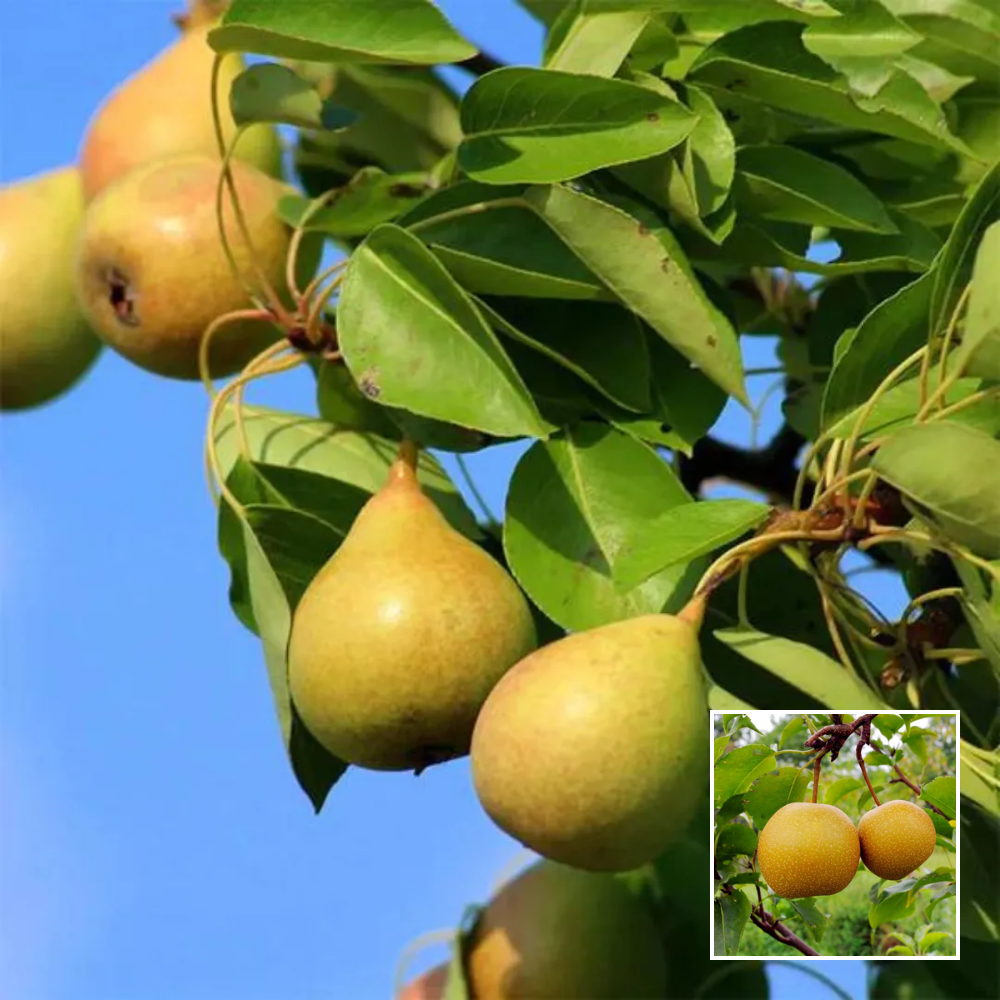
Nashpati, the pear (genus Pyrus), is a familiar temperate fruit that has traditionally been confined to India’s cooler hill regions such as Himachal Pradesh, Uttarakhand, and Kashmir, since most classic pear varieties need a long, cold winter chill period to flower and fruit reliably. Grafted, low-chill selections like this one have changed that picture considerably, bringing crisp, juicy pears within reach of gardeners well beyond the traditional pear belt.
Learn more about Pear on Wikipedia.
Appearance & Flavour
Depending on the specific variety grafted, nashpati fruit ranges from the classic teardrop pear shape to rounder, apple-like forms, with skin in shades of green, yellow, or a blushed red-brown. The flesh is juicy and, in many low-chill types, pleasantly crisp rather than the soft, buttery texture associated with European dessert pears, offering a refreshing sweetness with a mild grainy texture near the core.
Growing Conditions in India
Pears want full sun and deep, well-drained soil with room for a developing root system. While they still appreciate cooler nights where available, grafted low-chill types are considerably more forgiving of India’s warmer plains than an ungrafted seedling or a traditional high-chill variety would ever be, making them a realistic option for a much wider range of Indian gardens.
Planting Guide
Allow 5–6 metres of space in open ground for a mature pear tree, in a spot with good air circulation to reduce fungal disease pressure. Enrich the planting hole with compost, and stake young trees against wind until they are well rooted. Container growing is possible while young but pears generally do best transplanted to open ground eventually.
Watering & Feeding
Water deeply and regularly while the tree is young, then settle into watering as the topsoil dries out once established. Feed with organic compost in early spring ahead of flowering, and maintain even moisture through fruit development to avoid stress cracking in the developing fruit.
Pruning & Common Problems
Prune annually during the dormant season to maintain an open, airy shape, which both improves fruit quality and reduces fungal disease risk. Fireblight and fungal leaf spot are the main concerns for pears generally; removing and destroying affected shoots promptly limits their spread.
Harvest & Culinary Uses
Grafted trees fruit considerably sooner than seed-grown pears, which can otherwise take the better part of a decade. Depending on the variety, fruit is either picked while still firm and ripened off the tree, or left on the branch until it softens. Nashpati is eaten fresh, stewed, baked, or preserved in jams and chutneys.
Frequently Asked Questions
Can pears really be grown outside cold hill regions in India?
Yes — grafted low-chill pear varieties are specifically selected to flower and fruit with far less winter cold than traditional pear varieties need, making them viable across much warmer parts of the country.
Should nashpati be picked ripe or unripe?
Many pear varieties are actually best picked while still firm and allowed to finish ripening off the tree, which helps avoid the mealy texture that can develop if pears over-ripen while still attached.
How long before a grafted nashpati plant fruits?
Typically within 2–4 years under good care, compared to 6–8 years or longer for a seed-grown pear tree.
Do grafted pear trees need a pollinator partner?
Many pear varieties set more fruit with a second, compatible variety nearby for cross-pollination, though some low-chill types are reasonably self-fruitful — planting two grafted trees where space allows is a safe way to maximise yield.
Related Plants You Might Like
Explore more Exclusive Fruit Plants from Green Glow Nursery, including the Sweet Karonda – Exotic Plants and Long Mulberry – Exotic Plant.
Why Choose a Grafted Nashpati from Green Glow Nursery
Grafting brings pear-growing within reach of far more Indian gardens and shortens the wait for that first harvest considerably. Every plant is nursery-raised and delivered across India with our standard health guarantee.
What's inside the Box?
- 1 live plant, root ball intact
- Nursery bag with growing media
- Care and planting instructions
You may also like
 26% OFF
 36% OFF
 44% OFF
 29% OFF
Reviews