
Product Description
Long Mulberry Plant (Morus macroura) – Buy Rare Pakistan Shahtoot Trees Online | Green Glow Nursery
Learn more about Mulberry on Wikipedia.
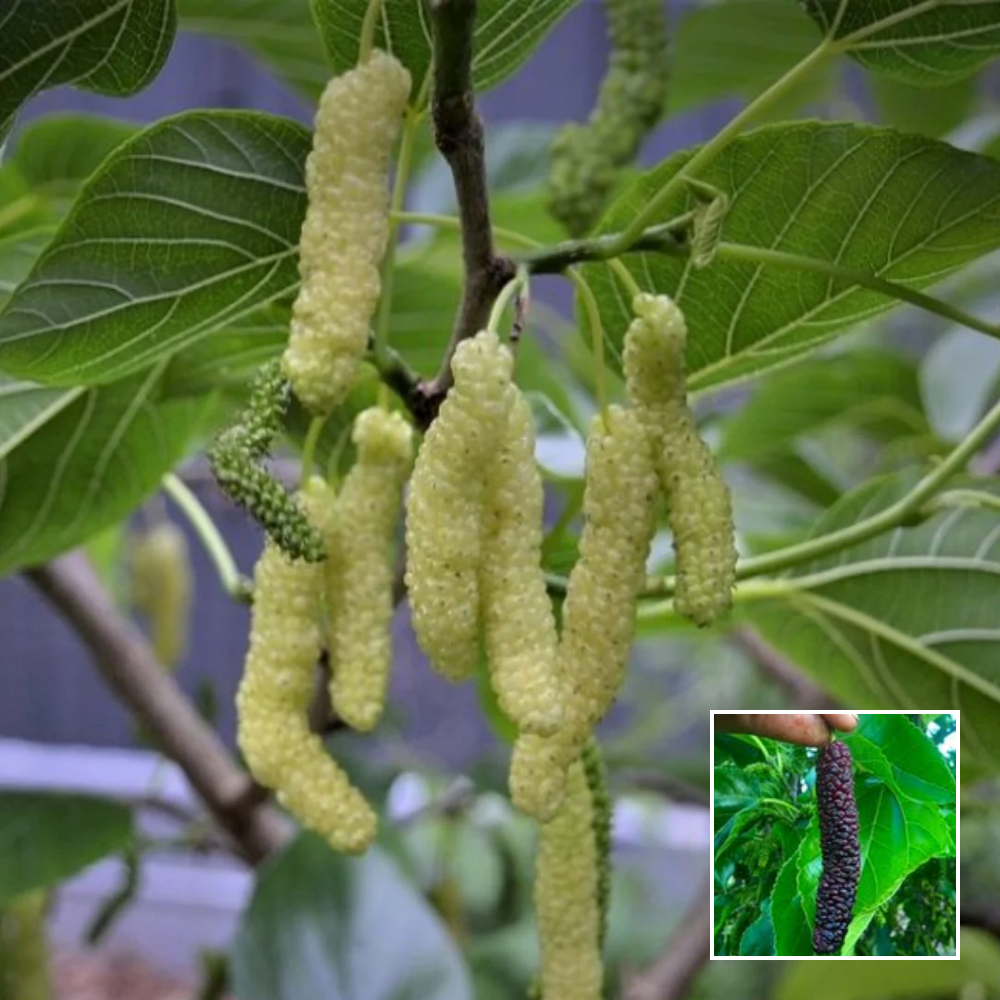
SPECIAL CHARACTER OF LONG MULBERRY – Imagine harvesting fruit that looks like exotic purple candles dangling from your tree! The Long Mulberry defies everything you expect from ordinary berries—producing magnificent, elongated fruits stretching 10–12 centimeters (4–5 inches) that ripen from ruby red to deep burgundy-black, creating a spectacular display against heart-shaped, glossy emerald leaves. Unlike common mulberries that offer mere bites, each Shahtoot delivers a generous mouthful of honey-sweet, slightly vanilla-kissed flesh with a texture reminiscent of firm jam, completely seedless and divinely smooth. What makes this cultivar truly extraordinary is its precocious productivity—blessing patient growers with armloads of these non-staining, finger-length treasures that transform from flower to feast in just 2–3 months. Whether you’re plucking them fresh for sunrise smoothies, drying them into nutritious winter snacks, or watching children marvel at their bizarre shape, this ancient Himalayan native brings the Silk Road’s most coveted fruit to your doorstep without the stain and mess of traditional varieties.
Botanical Profile – Known scientifically as Morus macroura and belonging to the Moraceae (mulberry/fig) family, this deciduous-to-semi-evergreen wonder carries the evocative Hindi name Shahtoot (Royal Mulberry) alongside monikers like Pakistan Mulberry, Himalayan Mulberry, and Long Red Mulberry. The tree performs a subtle reproductive magic—producing small, greenish catkins (inconspicuous flower spikes) along leafless branches in early spring, with female flowers developing into the legendary parthenocarpic fruit without requiring pollination or seeds. Native to the Himalayan foothills from Afghanistan through Northern India to Nepal, this vigorous species has been treasured for millennia along ancient trade routes, its sweet fruit fueling travelers and its robust leaves feeding silkworms that wove empires’ worth of silk.
MAXIMUM HEIGHT – Reaches 6–10 meters (20–33 feet) at full maturity under ideal conditions, with exceptional specimens touching 20+ meters (70 feet) in tropical climates. However, this fast-growing giant responds beautifully to aggressive pruning, maintaining a manageable 2.5–3.5 meters for home orchards and container cultivation. Regular cutting back keeps the harvest within arm’s reach and prevents the tree from becoming a skyscraper.
BLOOMING CYCLE – Your Long Mulberry awakens from winter dormancy with subtle elegance! Flowering commences in early spring (March to April) as the tree breaks dormancy, producing short, pendulous catkins of greenish-white flowers that mature quickly on new wood and old spurs alike. The blooming period lasts approximately 2–3 weeks, with flowers emerging before or alongside the first flush of heart-shaped leaves—depending on winter chill and spring warmth.
FRUITING TIMELINE – Patience rewards you with ancient sweetness remarkably soon! Grafted specimens typically bear their first finger-length fruits within 2–3 years after purchase, while seed-grown trees may take 5–8 years to mature. The transformation from microscopic flower to harvest-ready giant spans just 60–90 days. Expect your main bounty from late April through June (earlier than most mulberries), with the possibility of scattered summer crops in tropical climates. A mature tree yields 10–15 kg annually, with commercial potential reaching 25+ kg once fully established at 5+ years.
EXPERT GROWING TIPS FROM GREEN GLOW NURSERY
Climate Compatibility – Thrives in subtropical to warm temperate zones (USDA 7–10), remarkably adaptable from the Himalayan foothills to coastal California. Requires minimal winter chill (under 200 hours below 7°C) to break dormancy, making it suitable for mild-winter regions. Protect young trees from hard frosts below -4°C (25°F); mature specimens withstand brief dips to -7°C (20°F) once established. Full sun exposure is essential for maximum sweetness and fruit size.
Container Guidelines – Start with spacious 25×25 inch minimum pots (100+ liters preferred) using rich, well-draining mix amended with 30% coarse sand or perlite. Ensure generous drainage holes—Long Mulberry despises waterlogged roots! Upgrade containers every 2–3 years as this vigorous grower expands rapidly. Root prune every 3 years to maintain vigor in confined spaces, or plant in the ground with 8–10 meters spacing to accommodate the spreading canopy.
Planting Calendar – Best established during dormancy in late winter to early spring (January–March in temperate zones) when bare-root specimens transplant easily. In tropical zones, plant anytime avoiding the heaviest monsoon weeks. Position 9 meters away from foundations, driveways, and septic systems—this tree develops aggressive, shallow lateral roots that seek water and can damage infrastructure.
Soil Secrets – Flourishes in deep, well-drained sandy loams ranging from slightly acidic to mildly alkaline (pH 6.0–7.5). Astonishingly tolerant of poor, rocky, or clay soils provided drainage is excellent—avoid heavy waterlogged sites at all costs. Incorporate generous organic compost at planting to fuel this fast-growing giant, but avoid over-fertilizing which promotes excessive leafy growth at the expense of fruit.
Water Wisdom – Young trees need consistent, deep moisture—water weekly during establishment to develop the extensive root system this tall tree requires. Once fruiting begins, increase irrigation significantly from bloom through harvest; insufficient water causes premature fruit drop or dried, bland berries. Mature specimens tolerate brief drought but produce best with deep watering every 7–10 days during fruit development. Reduce watering in late fall to encourage dormancy.
Nutrition Schedule – Feed with balanced organic fertilizer (10-10-10) once in early spring as growth resumes, applied 45–90 cm away from the trunk. For potted specimens, apply slow-release granules every 3 months during growing season. Avoid high-nitrogen fertilizers (like ammonium sulfate) which produce weak, frost-susceptible growth. If leaves yellow in alkaline soils, apply chelated iron preventively. A annual top-dressing of 5–10 kg well-rotted manure enhances fruit quality without excessive vegetative growth.
Pruning for Productivity – Conduct heavy pruning immediately after fruiting finishes (late June–July) to control this vigorous giant’s height and encourage next year’s spurs. Remove crossing branches and thin the canopy to improve air circulation—essential in humid climates to prevent fungal issues. For size control, cut the central trunk low in winter and allow 3–5 scaffold leaders to develop. Never remove more than 25% of canopy at once to avoid shocking the tree. Sterilize tools between cuts to prevent disease spread.
Pollinator Partnership – The Long Mulberry is parthenocarpic (self-fertile)—female flowers develop seedless fruit without any pollination, making it perfect for solitary specimens. No male trees or pollinators required! However, the early spring catkins attract beneficial insects awakening from winter dormancy.
Harvest Hints – Fruits ripen progressively over 4–6 weeks, turning from green to red to deep purple-black. Harvest when fully colored and slightly yielding to gentle pressure—they will not ripen after picking! Unlike black mulberries, these beauties are non-staining (though very ripe fruits may leave slight marks). Handle carefully to avoid bruising the delicate, elongated berries. Pick in cool morning hours and consume, freeze, or dry within 24–48 hours for optimal flavor—fresh Shahtoots are too perishable for markets, making homegrown harvests truly precious!
Ready to grow the queen of mulberries? Shop rare Long Mulberry (Shahtoot) trees online at Green Glow Nursery and enjoy doorstep delivery of this Himalayan treasure—your shortcut to harvesting nature’s sweetest, most bizarrely beautiful berries!
Related Plants You Might Like
Explore more Mulberry Plants from Green Glow Nursery, including the Sweet Mulberry – Exotic Plant and Sweet Mulberry – Exotic Plants.
What's inside the Box?
- 1 live plant, root ball intact
- Nursery bag with growing media
- Care and planting instructions
You may also like
 26% OFF
 36% OFF
 44% OFF
 29% OFF
Reviews