
Product Description
Jaboticaba Plant (Plinia cauliflora) – Buy Rare Brazilian Grape Trees Online | Green Glow Nursery
Learn more about Jabuticaba on Wikipedia.
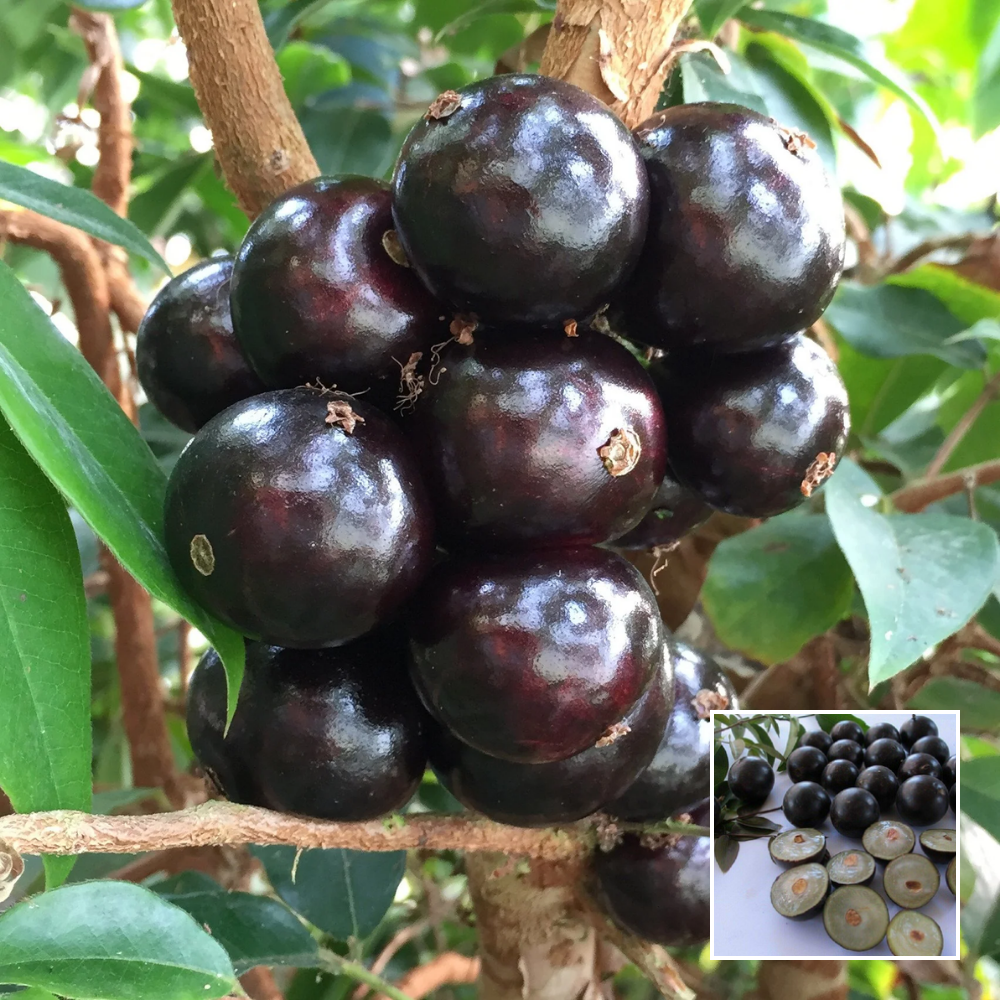
SPECIAL CHARACTER OF JABOTICABA – Prepare to witness one of nature’s most bizarre and beautiful spectacles! The Jaboticaba performs botanical magic called cauliflory—producing clusters of dark purple “grapes” that emerge directly from the trunk and branches like living jewelry, creating a stunning display that stops visitors in their tracks. Unlike ordinary fruit trees that bear on new twigs, this Brazilian wonder cloaks its woody stems with hundreds of globular berries ranging from emerald to deep violet-black when fully ripe. Slice one open to discover translucent, snow-white pulp with the consistency of firm jelly, releasing a unique flavor fusion of Concord grapes, lychee, and subtle resinous wine notes that divides enthusiasts into passionate camps. What makes this tree truly precious is its generous spirit—fruiting not once, but potentially two to six times annually depending on rainfall and care, ensuring multiple harvests of these short-lived treasures that refuse to travel (you’ll never find them in supermarkets!). Whether you’re fermenting ancient recipes for Brazilian wine, spooning the tangy-sweet flesh fresh from the tree, or simply staring in awe at the “grapevine” growing on bark, this slow-growing sculpture transforms your garden into a conversation piece that rewards patience with prehistoric drama.
Botanical Profile – Known scientifically as Plinia cauliflora (synonym Myrciaria cauliflora) and belonging to the Myrtaceae (myrtle) family, this evergreen marvel carries the evocative Brazilian name Jabuticaba and is affectionately called the Brazilian Grape Tree. The tree performs its most fascinating reproductive strategy—producing delicate, powder-puff clusters of tiny white flowers with a hauntingly sweet fragrance that erupts directly from the trunk and mature branches (cauliflory), attracting nocturnal pollinators with their hypnotic scent before transforming into the iconic dark berries. Native to the coastal rainforests and riverbanks of southern Brazil, Paraguay, and Bolivia, this water-loving species has been cultivated for centuries in home gardens where children traditionally wait 8–10 years for seed-grown trees to bless them with their first harvest.
MAXIMUM HEIGHT – Reaches 4.5–9 meters (15–30 feet) under ideal tropical conditions, with exceptional specimens touching 10 meters in deep Brazilian soils. However, this famously slow-growing giant rarely exceeds 2.5–5 meters (8–16 feet) in cultivation and container culture, responding beautifully to pruning that maintains a manageable 2–3 meters for easy trunk-harvesting. Patience is essential—seedlings may grow only 45 cm in three years!
BLOOMING CYCLE – Your Jaboticaba stages multiple floral performances throughout the year! The main flowering spectacle occurs in late winter through spring (February to April), producing dense, fuzzy white clusters that coat the bark like snow, releasing an intoxicating fragrance that fills the garden. In tropical climates with consistent moisture, secondary bloom flushes may appear 2–6 times annually, triggered by rainfall or heavy irrigation. Each flowering phase lasts approximately 2–3 weeks, with individual flowers requiring just 20–30 days to transform from blossom to ripe fruit—one of the fastest fruit development cycles in the tree world!
FRUITING TIMELINE – Patience harvests the sweetest Brazilian rewards! Grafted or air-layered specimens typically bear their first trunk-borne clusters within 3–5 years after purchase (some Red Hybrid varieties fruit in 2–4 years), while seed-grown trees demand 8–10 years (sometimes up to 18 years!) to mature. Once established, expect multiple cropping cycles yearly—main harvests in March–April with possible secondary crops in summer, autumn, or even winter under optimal conditions. A mature tree can yield 45–100+ kg annually, with individual berries developing from green to deep purple-black over just 20–25 days after flowering.
EXPERT GROWING TIPS FROM GREEN GLOW NURSERY
Climate Compatibility – Thrives in tropical to warm subtropical zones (USDA 9b–11), demanding consistent warmth between 21°C–32°C. Mature specimens tolerate brief dips to -2°C to -3°C (27–28°F) for short periods, but young trees suffer damage below -1°C (30°F). This humidity-lover flourishes in moist, frost-free environments—protect from drying winds and provide afternoon shade in extreme heat.
Container Guidelines – Highly recommended for containers! Start with 25×25 inch minimum pots using a special mix of 50% coconut coir and 50% perlite or vermiculite to maintain moisture while ensuring drainage. This tree despises drying out but hates waterlogged roots—achieve the balance with this fluffy, airy medium. Upgrade gradually: 4″ → 1 gallon → 3 gallon → 7 gallon → 15+ gallon over years. Partially bury large containers halfway in the ground to keep roots cool and humid.
Planting Calendar – Establish during spring or early summer when temperatures consistently exceed 20°C and frost danger has passed. In tropical zones, plant anytime avoiding the driest months. Space in-ground trees 4.5–6 meters (15–20 feet) apart—though they grow slowly initially, mature specimens develop broad, vase-shaped canopies.
Soil Secrets – Flourishes in deep, rich, well-drained soil with slight acidity (pH 5.5–6.5). While adaptable to various soil types including sandy compositions, avoid heavy clay or alkaline conditions that cause iron chlorosis (yellowing leaves). Incorporate generous organic compost and maintain a 10–15 cm mulch layer of pine bark or leaves to retain moisture and increase acidity.
Water Wisdom – Consistency is everything! Young trees need daily watering or every 2–3 days during establishment—never allow the root ball to dry completely. Mature specimens thrive with deep, frequent irrigation (3–4 times weekly in heat), mimicking their native riverbank habitat. Critical: Avoid overhead watering which causes leaf burn; water at the base only. Use filtered or rainwater if possible—high mineral content in well water causes tip burn.
Nutrition Schedule – Feed quarterly with balanced organic fertilizer (8-8-8 or 6-6-6) applied 45–90 cm away from the trunk, or use slow-release granules every 3–4 months. This tree is hungry for micronutrients—apply chelated iron and magnesium (Epsom salt sprays) monthly during growing season to prevent deficiencies common in container culture. Top-dress annually with composted pine needles to maintain acidity.
Pruning for Productivity – Less is more! This slow-growing tree requires minimal intervention. Conduct light pruning only to remove dead wood, shape the canopy, or control height—never heavy cutting that removes fruiting wood. For size management, prune after fruiting finishes. Remove water shoots to encourage horizontal branching that will eventually support the cauliflorous display. Sterilize tools between cuts to prevent fungal infection.
Pollinator Partnership – Flowers are self-fertile but benefit from insect visitation for maximum fruit set. The fragrant white puff-balls attract bees and night-flying insects—avoid pesticides during flowering phases (spring and intermittent summer/autumn flushes).
Harvest Hints – Fruits ripen directly on the trunk over 2–3 weeks, turning from bright green to deep maroon-purple or black. Harvest when fully colored and slightly soft to the touch—unlike grapes, they won’t ripen after picking! Handle carefully despite the thick, muscadine-like skin; the short shelf life means consume within 2–3 days at room temperature or refrigerate immediately for up to a week. Pick frequently to prevent carpet-staining drops and to beat the birds who adore these treasures!
Ready to grow the world’s most bizarre fruit display? Shop rare Jabotica (Brazilian Grape) trees online at Green Glow Nursery and enjoy doorstep delivery of this South American treasure—your shortcut to harvesting nature’s most conversation-worthy berries!
Related Plants You Might Like
Explore more Exclusive Fruit Plants from Green Glow Nursery, including the Four Season Longan – Exclusive (Rare) Variety and Milk Fruit (Star Apple) – Exotic Fruit.
What's inside the Box?
- 1 live plant, root ball intact
- Nursery bag with growing media
- Care and planting instructions
You may also like
 26% OFF
 36% OFF
 44% OFF
 29% OFF
Reviews