
Product Description
Milk Fruit Plant (Chrysophyllum cainito) – Buy Rare Star Apple Trees Online | Green Glow Nursery
Learn more about Star apple on Wikipedia.
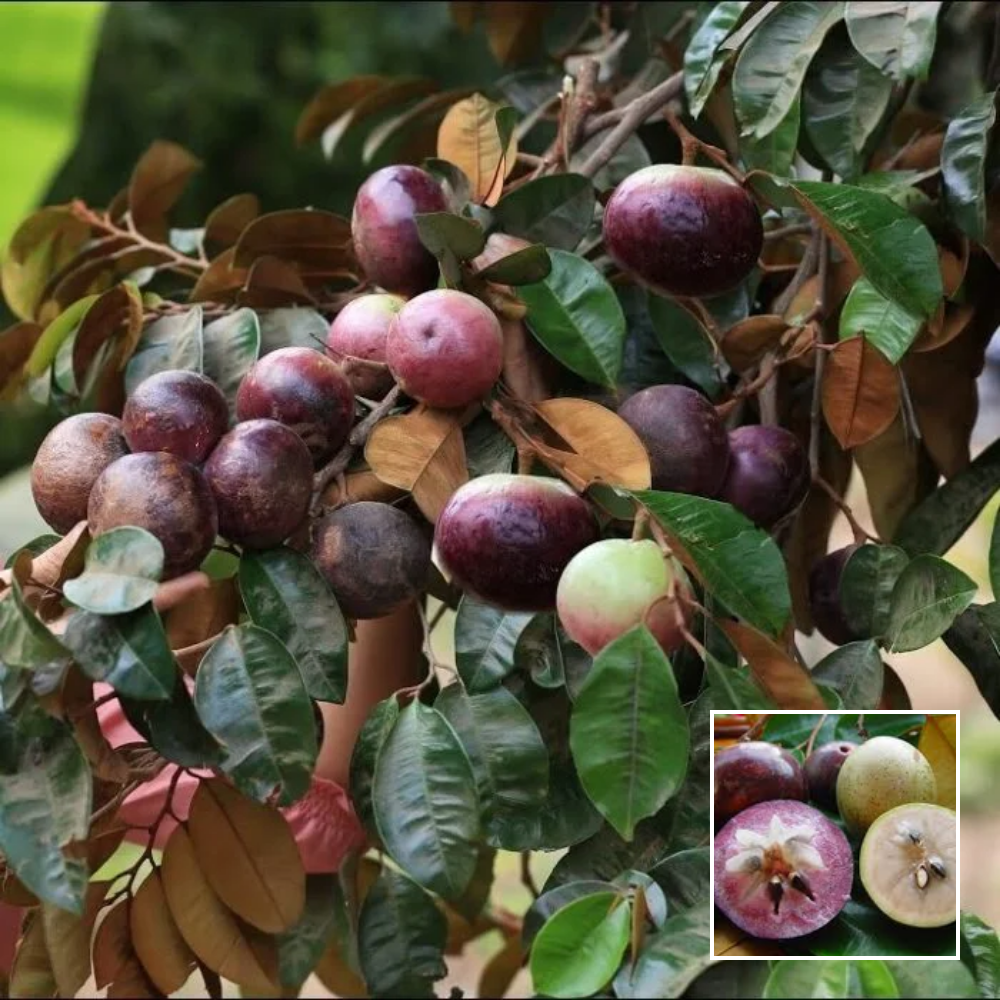
SPECIAL CHARACTER OF MILK FRUIT – Discover the celestial secret hidden within every harvest! The Milk Fruit enchants with its otherworldly beauty—smooth, glossy skin in deep royal purple or pale lime-green that feels like a cool rubber ball in your palm. Slice it crosswise and marvel at nature’s geometry: translucent flesh arranged in a perfect star pattern around a central core, each ray glistening with sweet, milky juice that earned this tropical treasure its evocative name. Unlike ordinary fruits, the pulp delivers a luxurious texture—jelly-like, custard-smooth, and delicately sweet with hints of vanilla and condensed milk that linger on your tongue. But the magic doesn’t stop at the fruit! The tree itself stands as a living sculpture with glossy emerald leaves that flash brilliant golden-bronze undersides when caressed by the breeze, creating a shimmering display that transforms your garden into an exotic retreat. Whether you’re spooning out chilled segments for elegant desserts or simply admiring the ornamental splendor that attracted ancient Mayan and Caribbean royalty, this self-pollinating wonder brings tropical luxury to your doorstep without demanding a green thumb.
Botanical Profile – Known scientifically as Chrysophyllum cainito and belonging to the Sapotaceae (sapodilla) family, this evergreen marvel carries the poetic Spanish name Caimito and is affectionately called Star Apple and Golden Leaf Tree across the tropics. The tree performs a fascinating reproductive strategy—bearing small, inconspicuous greenish-yellow to purplish-white tubular flowers in cone-shaped clusters along leaf axils, releasing a subtle nighttime fragrance that beckons nocturnal pollinators. Native to the lush lowlands of Central America and the West Indies, this species has journeyed across tropical Asia and India to become a cherished dooryard tree, its distinctive two-toned foliage making it as valuable for landscaping as for its delicious, nutritious fruit.
MAXIMUM HEIGHT – Reaches 8–30 meters (25–100 feet) under ideal tropical conditions, though prudent annual pruning maintains a manageable 2.4–3.7 meters (8–12 feet) for home orchards and easy harvesting. Container cultivation naturally restricts height to 2–3 meters while preserving the ornamental canopy.
BLOOMING CYCLE – Your Milk Fruit stages a subtle but sweet late-season floral display! Flowering occurs from late summer through fall (August to October), producing delicate cone-shaped clusters of tiny, purplish-white tubular blooms along the branches. These modest flowers work their magic at night, emitting an earthy fragrance that attracts beneficial pollinators while requiring no cross-pollination partner—making this tree perfect for solo specimens in smaller gardens.
FRUITING TIMELINE – Patience yields star-shaped treasures! Grafted specimens typically bear their first celestial harvest within 3–5 years after purchase, while seed-grown trees may require 5–10 years to mature. The transformation from blossom to table spans approximately 100–150 days (3–4 months). In tropical climates, expect your main bounty from February through May (late winter to early spring), with some trees producing year-round once fully established at 7+ years of age. The fruits hang patiently on the branch when ripe, refusing to drop until you’re ready to twist them free—nature’s perfect storage solution!
EXPERT GROWING TIPS FROM GREEN GLOW NURSERY
Climate Compatibility – Thrives in tropical to warm subtropical zones (USDA 10–12), demanding consistent warmth between 21°C–32°C. Protect from frost at all costs—young trees suffer damage at -0.6°C to 0°C, while mature specimens withstand brief dips to -1.6°C to -2.2°C before showing leaf and twig damage. Not suitable for coastal areas with salt spray.
Container Guidelines – Start with spacious 25×25 inch minimum pots (50+ gallons preferred) using rich, well-draining mix amended with coarse sand. Ensure generous drainage holes—this tree despises waterlogged roots! Upgrade containers every 2–3 years as the tree develops.
Planting Calendar – Establish during spring or early summer when temperatures consistently exceed 20°C and frost danger passes. In tropical zones, plant anytime avoiding the wettest weeks. Space in-ground trees 7.6 meters (25 feet) apart to accommodate the spreading, umbrella-shaped canopy that provides dappled shade.
Soil Secrets – Flourishes in deep, well-drained loamy-sandy soils ranging from slightly acidic to neutral (pH 6.0–7.5). While surprisingly adaptable to various soil types, avoid heavy clay or standing water that invites root rot. Incorporate generous organic compost at planting to fuel this moderate feeder.
Water Wisdom – Young trees need consistent, deep moisture to establish their framework—water weekly for the first six months. Mature specimens tolerate brief drought but produce best with regular irrigation from bloom through fruit development. Critical technique: Reduce watering during late fall and early winter to encourage flowering initiation, then resume generous moisture once blooms appear to swell the fruit. Never allow waterlogging!
Nutrition Schedule – Feed according to tree age for optimal star production:
Years 1–2: Apply balanced fertilizer (10-10-10) every other month during growing season
Years 3+: Fertilize three times yearly (March, July, and November) with standard fruit tree formulations
Micronutrient care: In alkaline soils (high pH), apply chelated iron preventively to avoid chlorosis (yellowing leaves)
Pruning for Productivity – Train young trees during the first 2–3 years to establish 3–5 main scaffold limbs for an open-center shape. Conduct annual pruning to maintain height at 2.5–3.5 meters for easy harvesting—remember, ripe fruits don’t fall naturally! Remove upright limbs and interior crossing branches to improve air circulation. Sterilize pruning tools between cuts to prevent disease spread.
Pollinator Partnership – While many varieties are self-fruitful (including ‘Haitian Star’ and ‘Blanco Star’), planting two different cultivars ensures heavier fruit sets. The nocturnal flowers welcome moths and night-flying insects—avoid pesticides during the flowering phase to protect these essential partners.
Harvest Hints – Fruits ripen on the tree and refuse to drop—check for slight softening and dull skin (bright gloss fades as maturity approaches). Twist gently to release; ripe fruits yield easily. Handle carefully to avoid bruising the delicate skin. Chill before serving for the most refreshing dessert experience!
Ready to harvest your own star-shaped superfood? Shop rare Milk Fruit (Star Apple) trees online at Green Glow Nursery and enjoy doorstep delivery of this Central American treasure—your gateway to milky-sweet tropical indulgence and golden-leaf beauty!
Related Plants You Might Like
Explore more Exclusive Fruit Plants from Green Glow Nursery, including the Black Longan – Exotic (Rare) Fruit Plant and Loquat Fruit – Exotic Plant.
What's inside the Box?
- 1 live plant, root ball intact
- Nursery bag with growing media
- Care and planting instructions
You may also like
 26% OFF
 36% OFF
 44% OFF
 29% OFF
Reviews