
Product Description
About the Loquat Plant
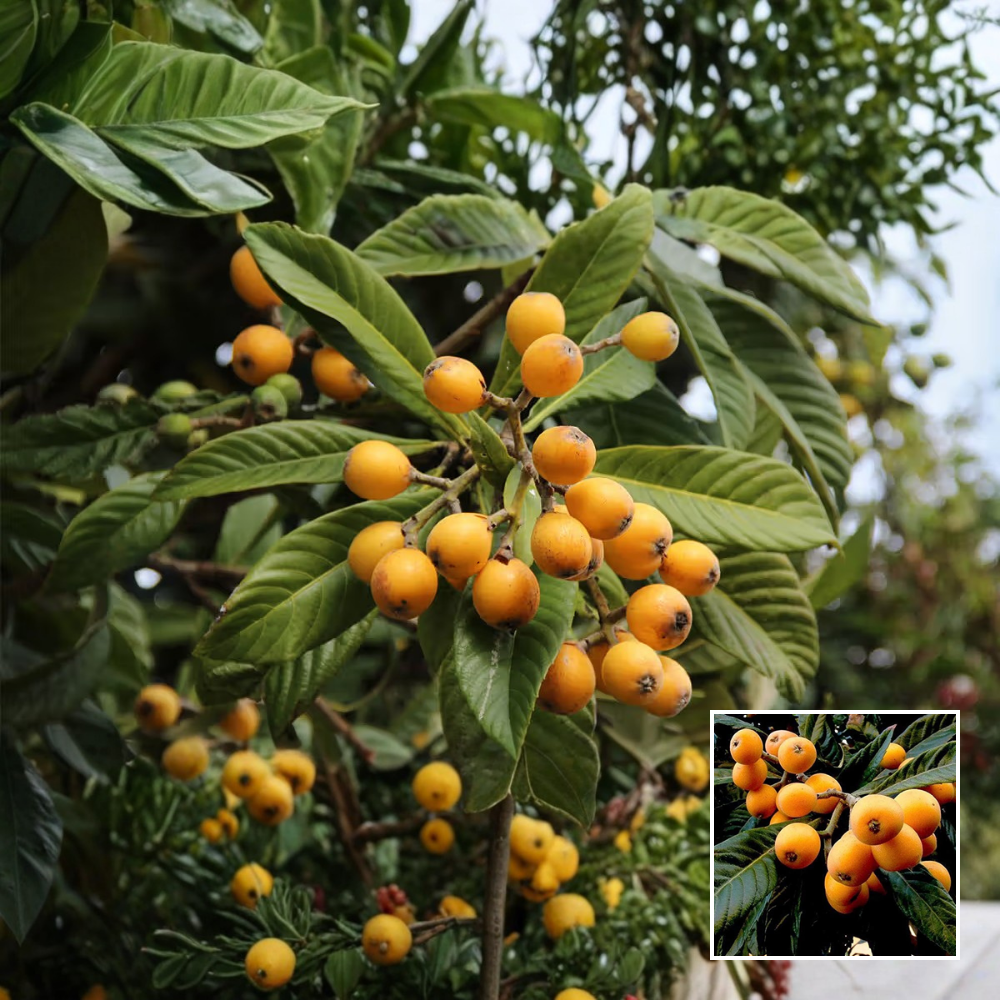
The Loquat (Eriobotrya japonica) is an evergreen fruit tree in the rose family, native to the cooler hill regions of southeastern China and later naturalised across Japan, the Mediterranean, and parts of India. It is one of the very few fruit trees that flowers in autumn and carries its fruit through winter, ripening in late winter to early spring — a season when almost nothing else in the garden is producing fruit. The tree itself is a handsome, medium-sized evergreen with large, glossy, leathery, dark green leaves that have a slightly fuzzy, ribbed underside, making it an attractive year-round planting even before it fruits.
Learn more about Loquat on Wikipedia.
Appearance & Flavour
Loquats grow in loose, drooping clusters of small, oval, orange-yellow fruit with thin, slightly downy skin. The flesh is juicy and tangy-sweet, often compared to a cross between a mild apricot and a tart plum, with one to a few large glossy brown seeds at the centre. The flavour balance shifts with ripeness — fruit picked early is tarter and firmer, while fully ripened fruit turns noticeably sweeter and softer.
Growing Conditions in India
Loquat is more cold-tolerant than most grafted exotics in this catalogue, comfortably handling brief dips near freezing once established, while also managing well through India’s warmer months given adequate water. It performs best in full sun with at least six hours of direct light daily, though it will tolerate partial shade with reduced fruiting. Soil should be well-drained; loquat is fairly adaptable across loamy, sandy, and even mildly clayey soils as long as water does not pool around the roots.
Planting Guide
When planting in the ground, allow at least 4–5 metres of clearance on all sides, since a mature loquat develops a broad, rounded canopy. In containers, choose a pot at least 45–60 cm wide and equally deep, with generous drainage holes, and expect to repot every two to three years as the root system develops. Position the plant where it gets morning sun and some shelter from harsh, drying afternoon wind while young.
Watering & Feeding
Water deeply once or twice a week during the first year, allowing the top few centimetres of soil to dry between waterings, and taper off further during the cooler months once established. Feed with a balanced organic fertiliser or well-rotted compost in early spring and again after harvest, avoiding heavy nitrogen close to flowering, which can encourage leafy growth at the expense of fruit.
Pruning & Common Problems
Light pruning immediately after harvest keeps the canopy open, improves air circulation, and encourages the next season’s flowering wood. Loquat is relatively pest-resistant, though fruit flies and birds can be a nuisance as fruit ripens — netting the canopy during the ripening window is the simplest control. Fireblight can occasionally affect loquat in humid conditions; removing and destroying any blackened, wilted shoots promptly limits its spread.
Harvest & Culinary Uses
Loquats are ready to pick when they turn fully orange and yield slightly to a gentle squeeze; unlike many fruits, they do not continue ripening once removed from the tree, so timing the harvest matters. Eat them fresh out of hand once the large seeds are removed, or use them in jams, chutneys, poached fruit desserts, and even savoury glazes, where their gentle tartness works well against rich flavours.
Related Plants You Might Like
Explore more Exclusive Fruit Plants from Green Glow Nursery, including the Aloo Bukhara (Plum) – Grafted Plant and Black Sugarcane – Exotic Plant.
Why Choose a Grafted Loquat from Green Glow Nursery
Because this plant is grafted rather than grown from seed, it begins flowering and fruiting years sooner than a seedling would, and it reliably reproduces the parent tree’s fruit quality rather than the unpredictable variation seed-grown loquats often show. Every plant is nursery-raised, carefully packed, and delivered across India with our standard health guarantee.
What's inside the Box?
- 1 live plant, root ball intact
- Nursery bag with growing media
- Care and planting instructions
You may also like
 26% OFF
 36% OFF
 44% OFF
 29% OFF
Reviews