Product Description
About the Thai Namdokmai Mango Plant
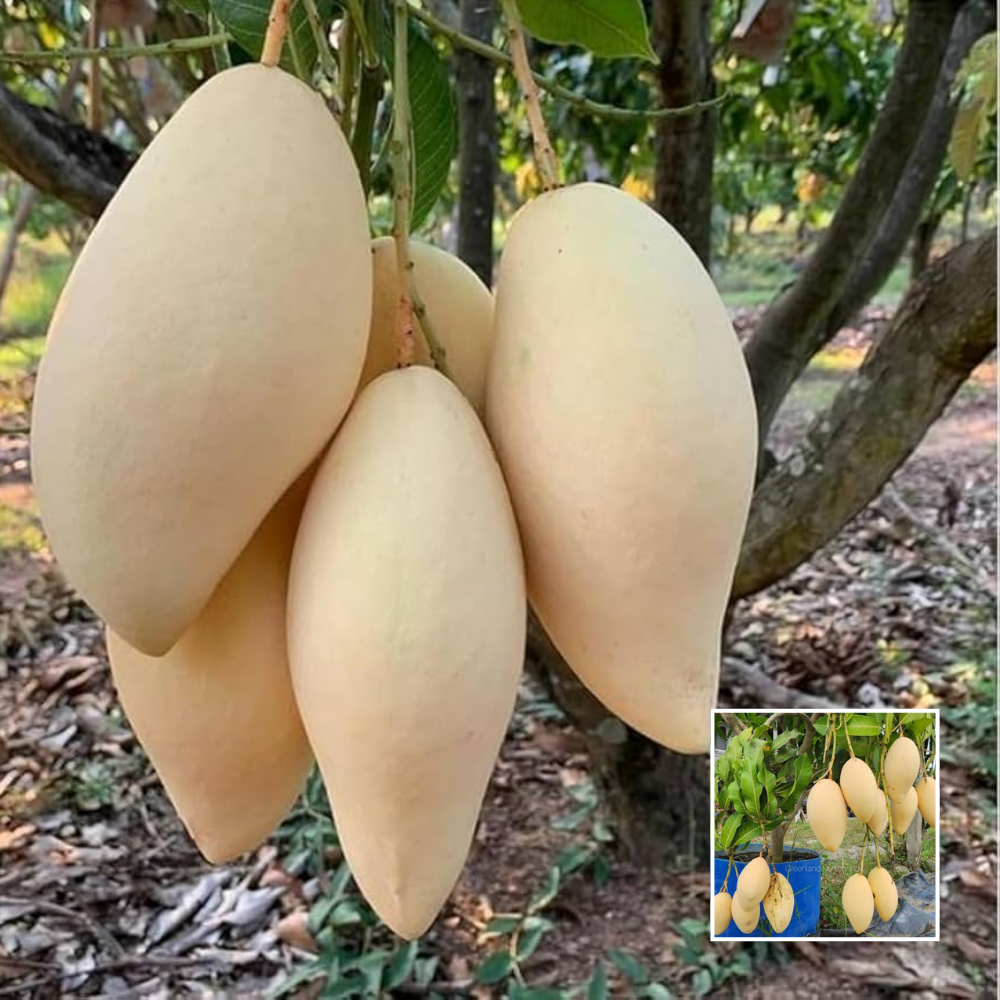
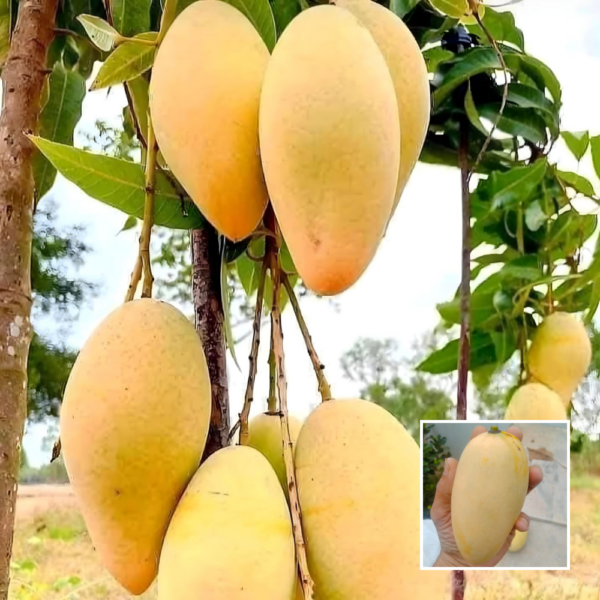
Nam Dok Mai, meaning "flower juice" in Thai, is one of Thailand’s most famous mango varieties (Mangifera indica), celebrated for its elongated shape, pale golden skin, and fragrant, honey-sweet flesh, traditionally enjoyed with sticky rice.
Learn more about Mango on Wikipedia.
Appearance & Flavour
The tree has glossy leaves and a rounded canopy, producing elongated fruit with smooth, pale golden-yellow skin. The flesh is fiberless and richly sweet with a distinctive fragrant, almost floral character.
Growing Conditions in India
Like other mango varieties, Nam Dok Mai wants full sun and well-drained soil, adapting to India’s warm growing regions.
Planting Guide
Allow 6-8 metres of space in open ground for this tree’s mature canopy. Enrich the planting hole with organic matter.
Watering & Feeding
Water regularly while young, then reduce as the topsoil dries once established. Feed with organic compost ahead of flowering.
Pruning & Common Problems
Annual pruning after harvest maintains an open, productive canopy. Generally trouble-free.
Harvest & Culinary Uses
Fruit can be eaten semi-ripe in the classic Thai style with sticky rice, or left to fully ripen for a softer, sweeter treat eaten fresh.
Frequently Asked Questions
Why is Nam Dok Mai so celebrated?
Its fragrant, honey-sweet flesh and traditional role in Thailand’s beloved mango sticky rice dessert.
How soon does a grafted plant fruit?
Typically within 2-3 years of planting.
Is it usually eaten ripe or unripe?
Traditionally semi-ripe with sticky rice, though it is equally good fully ripe.
Does it need special care?
No, standard mango care suits it well.
Related Plants You Might Like
Explore more Mango Plants from Green Glow Nursery, including the Thai White Dogmoi Mango and Golden Dogmoi Mango – Exotic Plant.
Everything You Need to Keep It Thriving
A container-grown fruit plant is only as healthy as the mix it sits in. Skip plain garden soil, which packs down hard over time and cuts off oxygen to the roots — Thai Namdokmai Mango Plant performs far better in a mix built for drainage as well as nutrition. Our potting mix guide gives three simple recipes you can put together with ingredients from any local nursery, along with notes on planting straight into the ground.
How often you water should track the weather, not the calendar — daily in peak summer, down to once a week or less once things cool off. More container plants are lost to overwatering than to neglect, so always check a couple of inches down before watering again rather than sticking to a fixed routine. Full details, including a simple finger-test you can use on Thai Namdokmai Mango Plant and everything else in our range, are in our watering guide.
A light, regular feeding schedule keeps growth steady without pushing the weak, sappy shoots that come from overfeeding. Ease off as growth slows for the season, since unused fertiliser just builds up as salts in the pot. Our fertiliser guide lays out what to feed and when, month by month.
The monsoon months call for extra attention to drainage, since a pot that stays waterlogged for even a few days can cost you Thai Namdokmai Mango Plant through root rot. Moving pots under a slight overhang and keeping an eye on standing water after heavy rain goes a long way. Our monsoon care guide has the full checks worth running before the rains arrive.
One more thing worth planning for: once Thai Namdokmai Mango Plant outgrows its current pot, moving up a size keeps growth from stalling, since a rootbound plant struggles to take up enough water and nutrients no matter how well you feed it. Signs it is time include roots showing through the drainage holes and the plant drying out unusually fast between waterings. Our potting and repotting guide covers exactly when to move up a size and how to do it without shocking the roots.
Why Choose Thai Namdokmai Mango from Green Glow Nursery
One of Thailand’s most famous mango varieties, grown at home. Every plant is nursery-raised and delivered across India with our standard health guarantee.
What's inside the Box?
- 1 live plant, root ball intact
- Nursery bag with growing media
- Care and planting instructions
You may also like
 27% OFF
 33% OFF
 28% OFF
 28% OFF
Reviews