
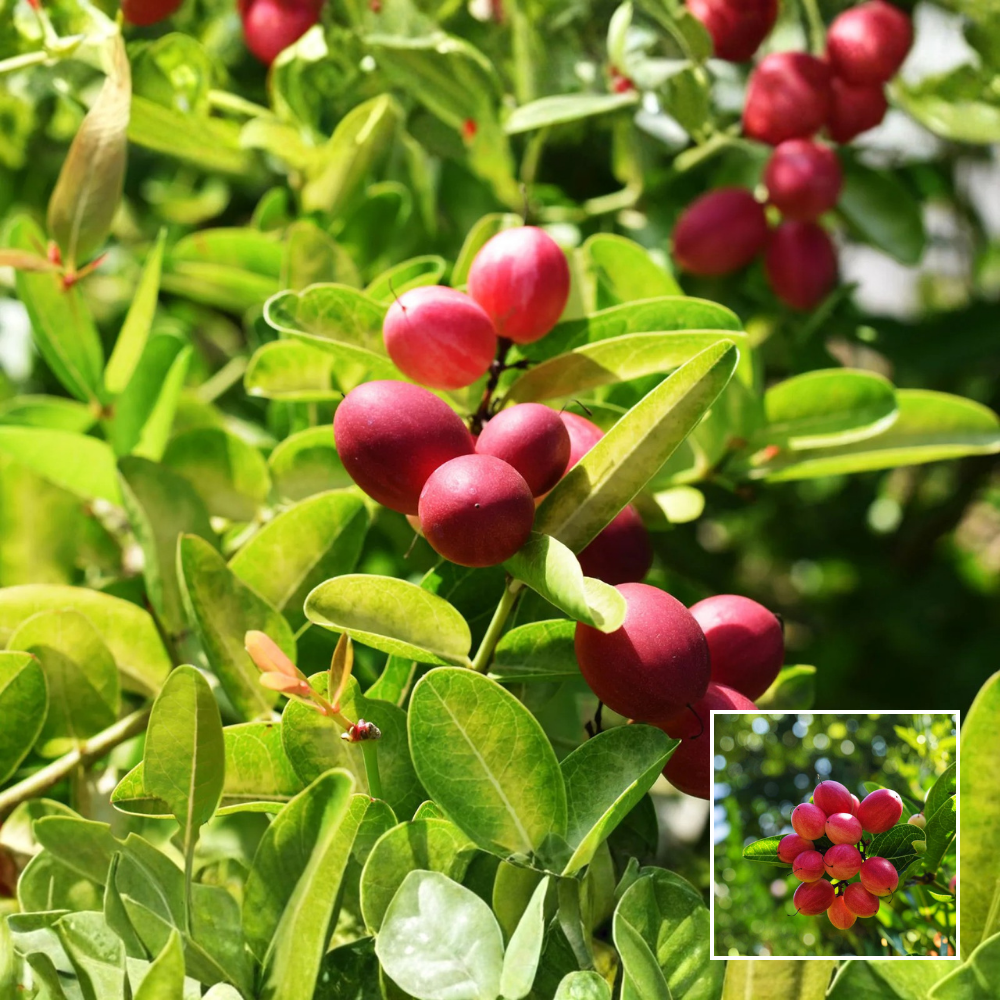
Product Description
About the Miracle Fruit Plant
Miracle Fruit (Synsepalum dulcificum) is a small evergreen shrub native to the tropical forests of West Africa, where it has been known to local communities for centuries, long before Western scientists became curious about the unusual protein responsible for its effect. It is grown far less for how its berries taste on their own — mildly sweet at best — and far more for the remarkable trick they play on the tongue immediately afterward.
Learn more about Miracle fruit on Wikipedia.
The Science Behind the Name
The small red berries contain a glycoprotein called miraculin, which binds to the tongue’s sweet taste receptors without triggering them directly. When a sour food is then eaten — a slice of lemon, a spoon of yoghurt, even vinegar — the receptors that are already primed by miraculin respond as though the food is sweet, creating a genuinely startling sensory experience that can last anywhere from twenty minutes to an hour.
Growing Conditions in India
Unusually for a fruiting plant, Miracle Fruit prefers distinctly acidic soil in the pH range of 4.5 to 5.8, and tolerates partial shade far better than most fruiting exotics, making it a good option for spots too shaded for sun-hungry plants. It is naturally compact and slow-growing, which also makes it well suited to pot culture on a balcony or shaded patio corner.
Planting Guide
Because it stays small, Miracle Fruit works well in a container as little as 30–40 cm wide, filled with an acidic potting mix — azalea or camellia compost blends are a reasonable substitute if a specialised mix is not available. Position it where it gets bright, indirect light or a few hours of gentle morning sun rather than harsh midday exposure.
Watering & Feeding
Keep the soil consistently moist — this plant does not like to dry out completely between waterings — and use rainwater or slightly acidified water where possible, since it is sensitive to the alkaline tap water common in many parts of India. Feed sparingly with a fertiliser formulated for acid-loving plants, applied at a reduced strength.
Pruning & Common Problems
Very little pruning is needed beyond removing any dead or damaged twigs to keep the compact shrub tidy. The most common issue growers run into is yellowing leaves caused by alkaline soil or water, which is easily corrected by switching to an acidic feed and, where possible, rainwater.
Harvest & Culinary Uses
Small red berries appear once the plant matures and are picked when fully red and slightly soft. The fresh berry is chewed slowly to coat the tongue, then followed immediately by sour or acidic foods to experience the taste-altering effect — a popular centrepiece at “flavour-tripping” parties and tastings.
Frequently Asked Questions
How long does the sweetening effect last?
Typically between twenty minutes and an hour, depending on the individual and how much of the berry was eaten, after which taste perception returns to normal.
Why does Miracle Fruit need acidic soil when most fruit plants don’t?
It evolved in the acidic, humus-rich forest floor conditions of West Africa, and its roots are simply adapted to that environment — alkaline soil interferes with nutrient uptake and quickly shows up as yellowing leaves.
Is Miracle Fruit safe to eat?
Yes, it has a long history of traditional use and is completely safe; the only “effect” is the temporary change in how sour foods taste afterward.
Can Miracle Fruit be grown indoors?
Yes, provided it gets bright indirect light for most of the day; it is naturally understorey-adapted, so it tolerates indoor and semi-shaded conditions better than most fruiting plants, though some direct morning sun will improve fruiting.
Related Plants You Might Like
Explore more Exclusive Fruit Plants from Green Glow Nursery, including the Keralian Coconut – Exotic Plant and Kiwi – Grafted Plant.
Why Choose a Miracle Fruit Plant from Green Glow Nursery
Our Miracle Fruit plants are nursery-raised in appropriately acidic conditions from the start, giving them a healthier foundation than many generically potted plants. Every plant is delivered across India with our standard health guarantee.
What's inside the Box?
- 1 live plant, root ball intact
- Nursery bag with growing media
- Care and planting instructions
You may also like
 26% OFF
 36% OFF
 44% OFF
 29% OFF
Reviews