
Product Description
About the Dalchini (Cinnamon) Plant
Dalchini, or Cinnamon (Cinnamomum verum), is a fragrant evergreen tree grown for its aromatic bark, widely used across Indian cooking, spice blends, and traditional remedies. Growing your own cinnamon plant brings a genuinely useful kitchen spice tree into the home garden.
Learn more about Cinnamon on Wikipedia.
Appearance & Flavour
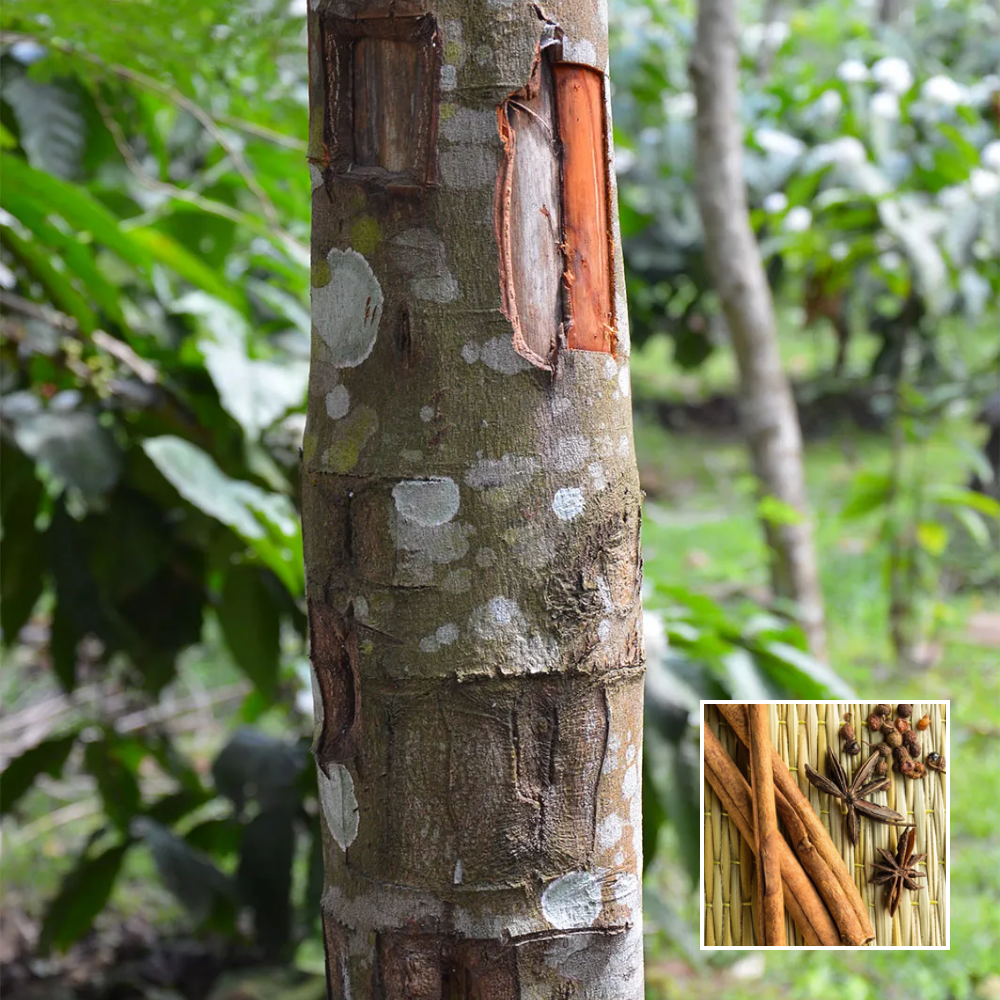
The tree has glossy, dark green leaves with a spicy fragrance when crushed, and reddish new growth that matures to green. The inner bark, once dried and curled, produces the familiar sweet, warm cinnamon spice.
Growing Conditions in India
Cinnamon thrives in warm, humid regions with well-drained soil, doing especially well in India’s coastal and tropical areas. It wants full sun to partial shade.
Planting Guide
Allow 3-4 metres of space in open ground for this tree’s mature spread, or grow in a large container while young. Choose a warm, humid position for the best growth.
Watering & Feeding
Keep soil consistently moist, cinnamon does not tolerate prolonged drought well. Light feeding with organic compost a couple of times a year supports steady growth.
Pruning & Common Problems
Light pruning helps maintain a manageable shape and can encourage the fresh growth from which bark is traditionally harvested. Generally trouble-free with adequate humidity and drainage.
Harvest & Culinary Uses
Bark is traditionally harvested from mature branches, dried, and curled into the familiar cinnamon quills, though many home growers simply enjoy the tree’s fragrant leaves and ornamental value. Leaves and bark are used throughout Indian spice blends, teas, and desserts.
Frequently Asked Questions
Can cinnamon bark be harvested from a home-grown tree?
Yes, though it typically takes a few years of growth before branches are mature enough for bark harvesting.
Does cinnamon need humid conditions?
Yes, it performs best in warm, humid regions similar to its native tropical habitat.
Can cinnamon be grown in a container?
Yes, while young it adapts well to large container growing.
Are the leaves useful even before bark harvesting?
Yes, the fragrant leaves can be used in cooking much like bay leaves.
Related Plants You Might Like
Explore more Spice Plants from Green Glow Nursery, including the Tej Patta (Bay Leaf) – Grafted Plants and Elaichi – Grafted Spice Plant.
Complete Care Overview
Getting the basics right matters more than any single trick, and it starts with what you plant Dalchini (Cinnamon) Plant into. Plain garden soil compacts hard inside a container and starves the roots of the air they need, which is one of the most common reasons a new plant struggles in its first year. A proper blend of soil, compost, cocopeat and coarse sand drains freely while still holding enough moisture between waterings. Our potting mix guide has three ready-to-use recipes, plus guidance on pit preparation if you are planting Dalchini (Cinnamon) Plant directly into the ground.
Watering habits should shift with the seasons rather than stay on a fixed schedule — more often in peak summer heat, far less once growth slows in the cooler months. Overwatering, not underwatering, is one of the most common ways a healthy container plant is lost, since waterlogged roots can rot before the leaves show any obvious sign of stress. Checking the soil a couple of inches down before watering again, rather than watering on autopilot, is a habit worth building early. Our watering guide walks through a simple routine that applies across our full range of fruit plants.
Feed lightly and regularly rather than heavily and rarely: a balanced organic feed every few weeks during the growing season supports steady growth without the salt build-up in the pot that comes from overfeeding. Skip feeding altogether once growth slows for the year, since the plant cannot use nutrients it is not actively growing with. See our fertiliser guide for a season-by-season feeding plan that works for Dalchini (Cinnamon) Plant and the rest of our catalogue alike.
Monsoon brings its own risks for a potted fruit plant — mainly waterlogging and the fungal problems that follow when a pot cannot drain fast enough through days of continuous rain. Raising the pot slightly off the ground and checking that drainage holes are clear before the rains set in prevents most of the damage we see every year. Our monsoon care guide covers the full pre-monsoon checklist.
Why Choose Dalchini (Cinnamon) from Green Glow Nursery
A genuinely useful, fragrant spice tree for the home garden. Every plant is nursery-raised and delivered across India with our standard health guarantee.
What's inside the Box?
- 1 live plant, root ball intact
- Nursery bag with growing media
- Care and planting instructions
You may also like
 17% OFF
 26% OFF
 33% OFF
 30% OFF
Reviews