
Product Description
About the Bombay Litchi Plant
Bombay Litchi is a well-known commercial litchi variety (Litchi chinensis) grown for its juicy, sweetly fragrant fruit, popular across western Indian markets. Like other litchi types, it rewards a warm, humid climate with clusters of the fruit’s distinctive translucent flesh.
Learn more about Litchi on Wikipedia.
Appearance & Flavour
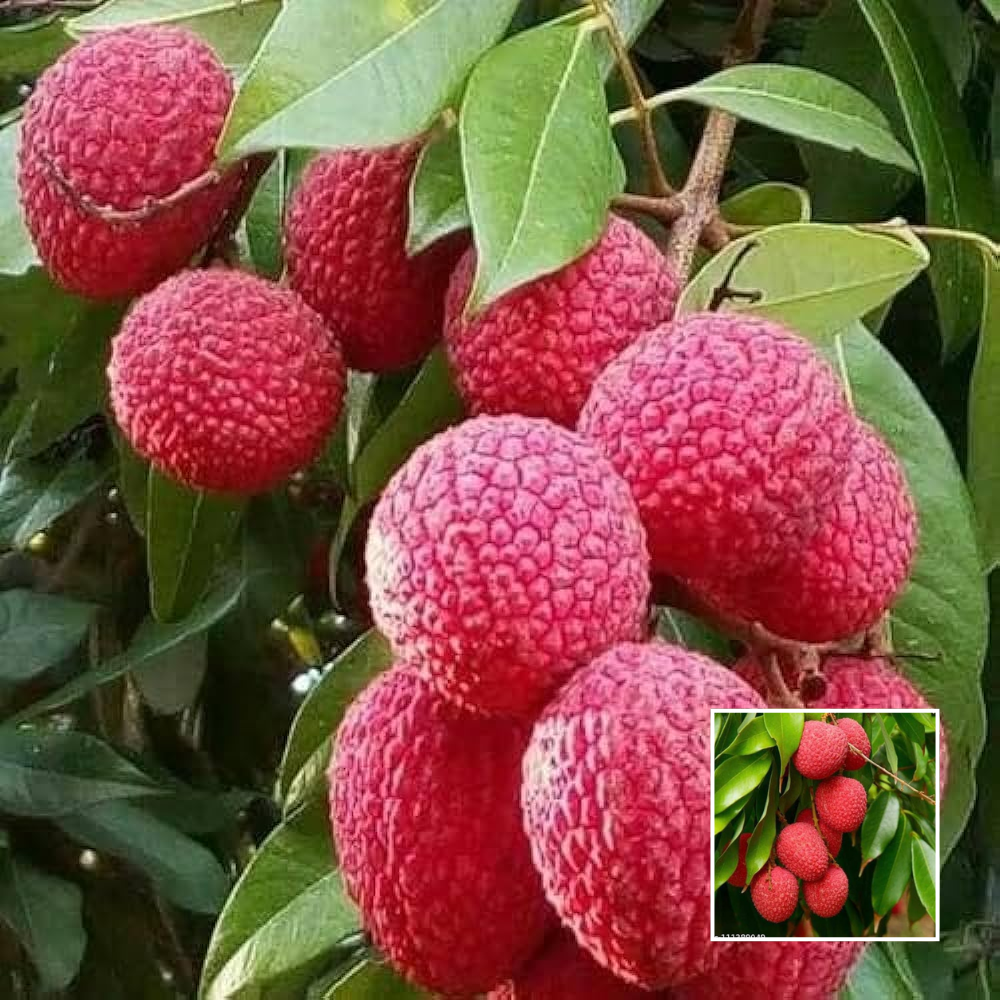
The tree has glossy, compound leaves and a dense, rounded canopy, producing clusters of small fruit with rough, reddish-pink skin. The flesh inside is translucent white, juicy, and sweetly fragrant, wrapped around a single glossy seed.
Growing Conditions in India
Litchi wants full sun and well-drained, moderately fertile soil, performing best in India’s warm, humid regions with a defined winter cool period to trigger good flowering.
Planting Guide
Allow 6-8 metres of space in open ground for this tree’s broad mature canopy. Enrich the planting hole with organic matter and stake young trees until well rooted.
Watering & Feeding
Water deeply and regularly while young, then water as the soil dries once mature. A brief dry spell ahead of flowering, followed by consistent watering, supports the best fruit set.
Pruning & Common Problems
Light annual pruning after harvest maintains a productive shape. Birds are often the main competition for ripe fruit, making netting worthwhile during the fruiting season.
Harvest & Culinary Uses
Fruit is ready once the skin turns a rosy red-pink and separates cleanly from the flesh. Eat fresh for the classic litchi experience, or use in fruit salads and desserts.
Frequently Asked Questions
How soon does a grafted litchi tree fruit?
Typically within 3-4 years of planting.
Does litchi need a cold winter to fruit?
It benefits from a defined cool period, though it does not need extreme cold, making it suitable for a range of Indian climates.
What is Bombay Litchi known for?
Its reliable yields and popularity in western Indian markets have made it a well-established commercial variety.
Do birds cause problems with litchi?
Yes, netting during ripening is often worthwhile to protect the sweet, fragrant fruit.
Related Plants You Might Like
Explore more Litchi Plants from Green Glow Nursery, including the Muzaffarpur Litchi – Grafted Plants and Seedless Litchi – Exotic Plants.
A Full Care Routine for Bombay Litchi Plant
Everything starts with the potting mix. Garden soil alone turns hard and airless in a container, so give Bombay Litchi Plant a proper blend built for drainage and steady moisture rather than soil alone — our potting mix guide has three recipes that work well across our range, along with tips for planting in open ground.
Watering is one habit worth getting right: water generously through the warm months, then pull back sharply as growth slows in winter. Checking the soil before watering, rather than watering on a fixed schedule, helps prevent one of the most common causes of lost container plants. Our watering guide covers the routine in full, with a simple test you can apply to Bombay Litchi Plant straight away.
Feed little and often through the growing season using a balanced organic fertiliser, tapering off as growth slows for the year. Our fertiliser guide breaks this down by season so you always know what Bombay Litchi Plant needs next.
Monsoon brings its own risks for a potted fruit plant — mainly waterlogging and the fungal problems that follow when a pot cannot drain fast enough through days of continuous rain. Raising the pot slightly off the ground and checking that drainage holes are clear before the rains set in prevents most of the damage we see every year. Our monsoon care guide covers the full pre-monsoon checklist.
Why Choose Bombay Litchi from Green Glow Nursery
A dependable, well-loved litchi variety for Indian gardens. Every plant is nursery-raised and delivered across India with our standard health guarantee.
What's inside the Box?
- 1 live plant, root ball intact
- Nursery bag with growing media
- Care and planting instructions
You may also like
 26% OFF
 36% OFF
 44% OFF
 29% OFF
Reviews