
Product Description
About the Mangosteen Plant
Mangosteen (Garcinia mangostana) is native to the Malay Archipelago and has earned the nickname “Queen of Fruits” for the delicate, sweet-tart white segments hidden beneath its thick, deep purple rind — a fruit so prized that even Queen Victoria is said to have offered a reward to anyone who could bring her a fresh one during the age of sail, long before refrigerated shipping made that possible.
Learn more about Mangosteen on Wikipedia.
Appearance & Flavour
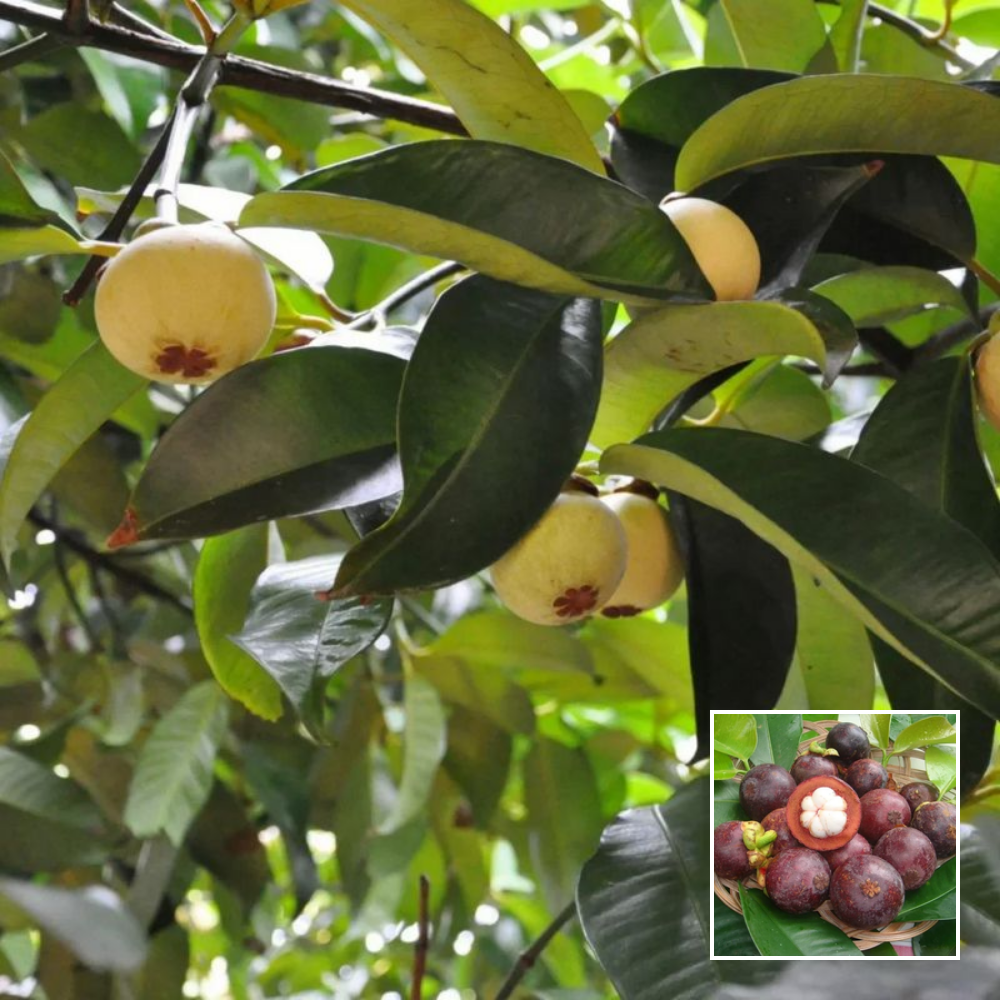
The fruit is round, roughly the size of a small apple, with a hard, deep purple rind that conceals soft white segments arranged like a small citrus fruit inside. The flavour is often described as a delicate balance of sweet and tart, sometimes compared to a blend of lychee, peach, and citrus, with a texture so soft it almost dissolves on the tongue.
Growing Conditions in India
Mangosteen needs consistent warmth and humidity year-round and does not tolerate drought, cold, or strong direct wind well, making India’s more humid coastal and southern regions its natural fit, ideally with some shelter while the plant is young. Rich, well-drained soil with consistent organic matter suits it best.
Planting Guide
Mangosteen eventually grows into a tall, pyramid-shaped tree, so allow 6–8 metres of clearance in open ground, in a sheltered spot away from harsh wind and drying midday sun while establishing. Enrich the planting hole generously and consider providing temporary shade cloth for the first year or two.
Watering & Feeding
Keep soil consistently moist — mangosteen is unforgiving of prolonged dryness — and mulch generously to hold moisture and moderate soil temperature around its notably shallow root system. Feed lightly and regularly with organic compost rather than heavy applications, which the sensitive root system does not appreciate.
Pruning & Common Problems
Minimal pruning is needed beyond removing damaged growth. The most common challenges are related to environment rather than pests — drying wind, inconsistent watering, and cold snaps all stress the plant far more than any insect or disease typically would.
Harvest & Culinary Uses
This is a genuinely long-term planting; even grafted mangosteen takes patience to reach fruiting age, but grafted stock still arrives there years ahead of a seedling. Ripe fruit has a deep purple rind that yields slightly to pressure. Twist or cut it open and eat the segments fresh — mangosteen is rarely used any other way, since its delicate flavour is best appreciated entirely on its own.
Frequently Asked Questions
Why does mangosteen take so long to fruit?
It is simply a naturally slow-growing tree with a long juvenile period before it matures enough to flower, a trait true of both seedling and, to a lesser extent, grafted plants.
Can mangosteen be grown outside of humid coastal regions?
It is possible with dedicated humidity and wind protection, but it will always perform best in genuinely humid, warm, sheltered conditions similar to its native range.
How do you know when a mangosteen is ripe?
The rind turns a deep, even purple and gives slightly when pressed gently — a hard, pale rind means the fruit needs more time.
Is mangosteen difficult to grow compared to other exotics?
It is more demanding than most, requiring steady humidity, shelter, and patience, but the reward is a fruit widely considered one of the finest-tasting in the tropical world.
What does mangosteen taste like compared to other tropical fruit?
Many describe it as a delicate blend of lychee, peach, and a touch of citrus, with a texture so soft and juicy it almost melts, unlike the firmer bite of most other tropical fruit.
Related Plants You Might Like
Explore more Exclusive Fruit Plants from Green Glow Nursery, including the Milk Fruit (Star Apple) – Exotic Fruit and Ram Bhutan – Exotic Plants.
Why Choose a Grafted Mangosteen from Green Glow Nursery
A grafted mangosteen reaches fruiting age meaningfully sooner than seed-grown stock, an important head start given how patient this fruit already demands growers be. Every plant is nursery-raised and delivered across India with our standard health guarantee.
What's inside the Box?
- 1 live plant, root ball intact
- Nursery bag with growing media
- Care and planting instructions
You may also like
 26% OFF
 36% OFF
 44% OFF
 29% OFF
Reviews