
Product Description
About the Durian Plant
Durian (Durio zibethinus) is a large tropical tree native to Borneo and Sumatra, belonging to the same botanical family as hibiscus and okra despite bearing no resemblance to either in its fruit. Across Southeast Asia it carries the informal title “King of Fruits,” a reputation built on its imposing, thorn-covered husk and its rich, custard-like flesh, prized by devoted fans even as its powerful aroma keeps it banned from hotels, airports, and public transport across much of the region.
Learn more about Durian on Wikipedia.
Appearance & Flavour
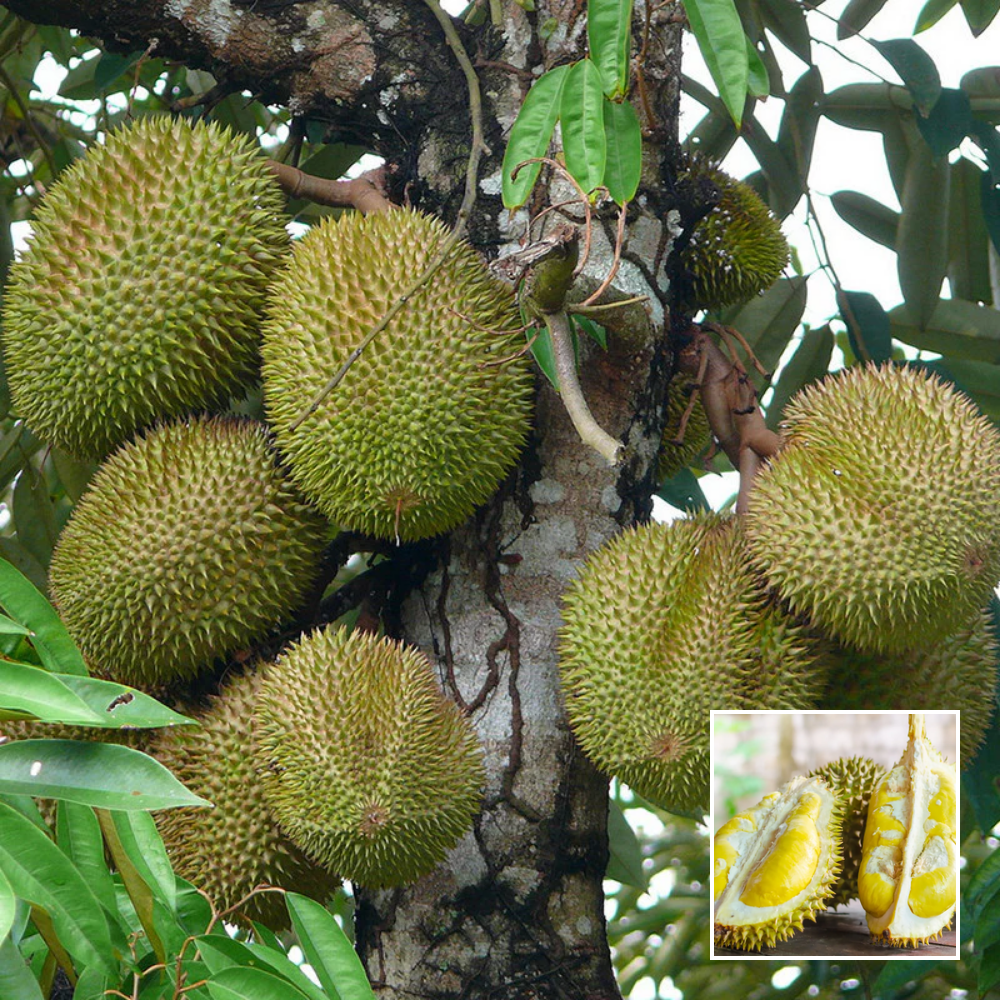
The fruit itself is large and oval, encased in a hard, olive-green to yellowish husk studded with sharp, pyramid-shaped spikes. Inside, several compartments each hold a few large seeds wrapped in thick, custardy flesh ranging from pale yellow to deep gold depending on variety. The flavour is famously polarising — rich, sweet, faintly savoury, and often compared to a blend of caramel, onion, and almond, wrapped in an intensely pungent aroma that some find irresistible and others avoid entirely.
Growing Conditions in India
Durian needs consistent tropical heat and high humidity to thrive, making it best suited to India’s warmer, more humid coastal and southern regions rather than the drier plains or cooler hill areas. It wants full sun once established, though young plants benefit from partial shade while their root systems develop. Deep, rich, well-drained soil suits it best, and it is notably intolerant of both waterlogging and prolonged drought.
Planting Guide
Durian eventually grows into a very large tree, so gardeners should allow at least 8–10 metres of clearance in every direction when planting in open ground — this is a long-term, space-hungry planting rather than a compact one. Choose a sheltered spot away from strong winds, which can damage both the tree and developing fruit, and enrich the planting hole generously with organic matter before setting the plant in.
Watering & Feeding
Water deeply and regularly while the plant is young and establishing its root system, then settle into a routine of consistent watering through the growing season once mature, easing back slightly during any cooler or wetter spells. Mulch heavily around the base to conserve soil moisture and moderate root temperature, and feed with organic compost or well-rotted manure during the main growing months.
Pruning & Common Problems
Minimal pruning is needed beyond removing damaged or crossing branches to maintain good structure as the tree matures. Root rot from poorly drained soil is the most serious risk, so drainage deserves real attention at planting time; beyond that, durian is not especially prone to pest problems in most Indian growing conditions.
Harvest & Culinary Uses
Grafted durian fruits considerably sooner than a seed-grown tree, though this remains a patient, long-term crop either way. Ripe fruit typically falls naturally from the tree rather than being cut, a traditional sign that it has reached full ripeness. The flesh is eaten fresh by the spoonful straight from the husk, and is also used across Southeast Asia in ice creams, pastries, sticky rice desserts, and even savoury sauces.
Frequently Asked Questions
How long does a grafted durian take to fruit?
Grafted durian typically begins fruiting in around 4–6 years under good conditions, compared to 8–10 years or more for a seed-grown tree, though exact timing depends heavily on climate, care, and regional growing conditions.
Can durian be grown outside of India’s humid coastal regions?
It is possible with extra care — consistent watering, humidity around the canopy, and shelter from drying wind — but durian will always perform best and fruit most reliably in genuinely humid, warm, tropical conditions similar to its native Southeast Asian range.
Why does durian smell so strong?
The aroma comes from a complex mix of sulphur compounds that develop as the fruit ripens; it is entirely natural and is not a sign of spoilage, though it is intense enough that many public spaces across Southeast Asia restrict bringing the fruit indoors.
Related Plants You Might Like
Explore more Exclusive Fruit Plants from Green Glow Nursery, including the Sweet Karonda – Exotic Plants and Sweet Santol – Exotic Plant.
Why Choose a Grafted Durian from Green Glow Nursery
A grafted durian reaches fruiting age years earlier than seed-grown stock and reliably reproduces the parent variety’s flavour and texture, removing the guesswork that comes with growing durian from seed. Every plant we supply is nursery-raised, carefully packed for transport, and delivered across India with our standard health guarantee.
What's inside the Box?
- 1 live plant, root ball intact
- Nursery bag with growing media
- Care and planting instructions
You may also like
 26% OFF
 36% OFF
 44% OFF
 29% OFF
Reviews