Product Description
About the Sweet Santol Plant
Santol (Sandoricum koetjape) is a Southeast Asian fruit tree that belongs, somewhat surprisingly, to the mahogany family — making it a closer relative of neem and true mahogany than of any common fruit. It grows into a tall, straight-trunked tree in its native range across Malaysia, Thailand, and the Philippines, valued for a fruit that earns the affectionate nickname “cotton-fruit” for its soft, fibrous pulp.
Learn more about Santol on Wikipedia.
Appearance & Flavour
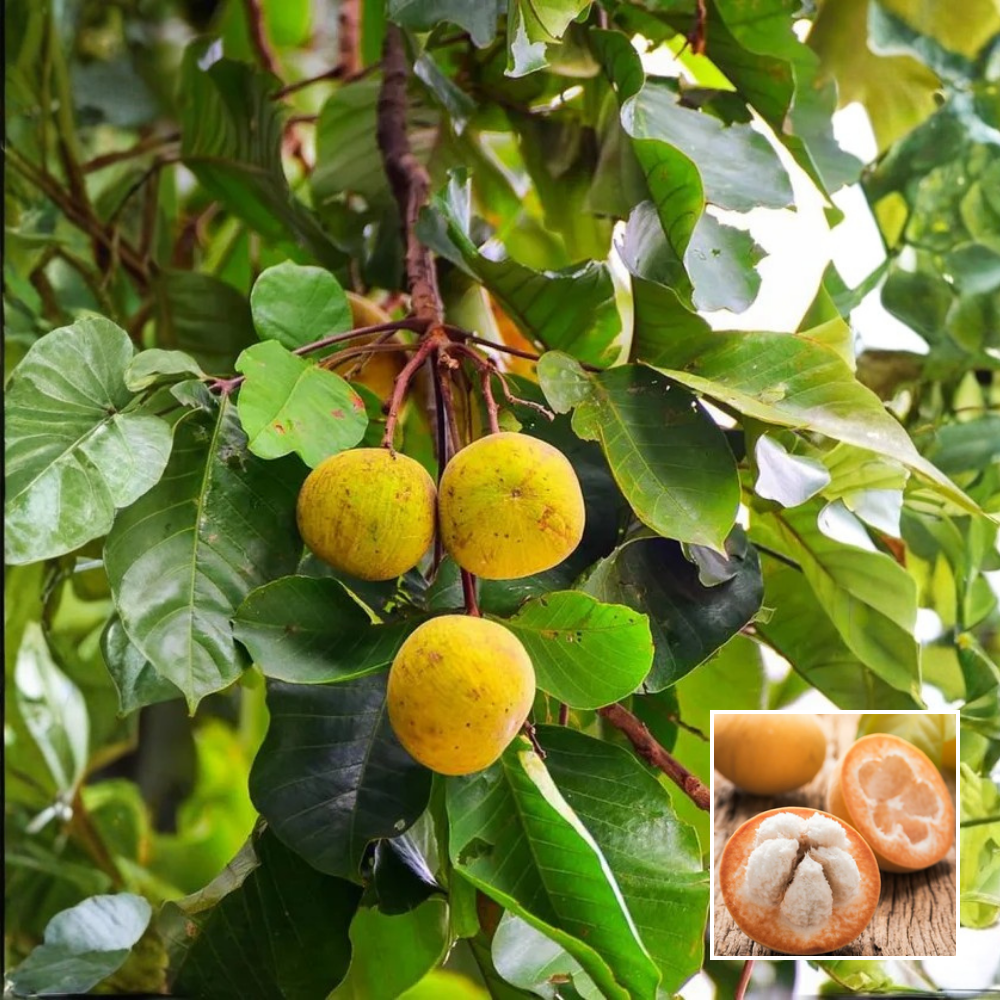
The fruit is round to slightly flattened, with a firm yellow-brown to golden skin enclosing segments of soft, cottony white flesh wrapped around each seed. Two natural types exist in the wild — sour and sweet — and this is the sweet-fleshed selection, meant to be eaten fresh rather than reserved for the pickling sour types are traditionally used for.
Growing Conditions in India
Santol is genuinely tropical and wants consistent warmth, humidity, and full sun through the year, making it well suited to India’s warmer, more humid regions rather than areas with cold winters. It is not frost-hardy, so gardeners in cooler zones should keep it in a sheltered, sunny spot or bring container-grown plants under cover during any cold snaps.
Planting Guide
In open ground, allow generous space — at least 5–6 metres — since santol grows into a substantial tree over time. For container growing, start with a large pot of at least 50 cm diameter and expect to repot as the plant grows; a warm, sheltered courtyard or terrace corner suits it well.
Watering & Feeding
Keep the soil consistently moist but never waterlogged, watering more frequently during hot, dry stretches and easing back slightly during cooler or wetter months. An annual application of organic compost or well-rotted manure supports steady growth, and santol generally asks for little beyond that once established.
Pruning & Common Problems
Occasional shaping keeps a home-garden santol at a manageable height and encourages a fuller canopy. The tree is relatively untroubled by serious pests in most conditions, though fruit flies can target ripening fruit, so timely harvesting and removing any fallen or overripe fruit from the ground helps keep infestations down.
Harvest & Culinary Uses
Fruit ripens to a soft yellow skin and is ready when it gives gently under light pressure. Peel and eat the segments fresh, or use the tangy-sweet pulp in fruit salads and desserts, the way it is traditionally enjoyed across the Philippines, Thailand, and Malaysia — either on its own or paired with a light sprinkle of salt or chilli to balance its sweetness.
Health & Nutrition
Santol pulp is a reasonable source of dietary fibre and vitamin C, and in parts of Southeast Asia the fruit and even the bark and leaves have a long history in traditional preparations, from soothing upset stomachs to being used in local skincare remedies. Whatever the traditional use, the fresh sweet pulp itself remains the main draw for most home growers.
A Note on Container Growing
While santol eventually grows into a substantial tree in open ground, young plants tolerate container life well for the first several years, which suits gardeners who want to enjoy the plant’s glossy foliage and eventual fruit on a terrace before committing to a permanent spot in the garden, giving you time to observe how the tree performs in your specific conditions before making that decision. Choose the largest pot practical, and plan to transplant into open ground once the plant outgrows convenient repotting.
Related Plants You Might Like
Explore more Exclusive Fruit Plants from Green Glow Nursery, including the Aloo Bukhara (Plum) – Grafted Plant and Golden Custard Apple – Exotic Plant.
Why Choose a Grafted Sweet Santol from Green Glow Nursery
Grafting ensures this plant carries the true sweet-fleshed character of its parent rather than the unpredictable sour-to-sweet variation seed-grown santol often shows, and it begins fruiting years earlier than a seedling tree would. Every plant is nursery-raised and delivered across India with our standard health guarantee.
What's inside the Box?
- 1 live plant, root ball intact
- Nursery bag with growing media
- Care and planting instructions
You may also like
 26% OFF
 36% OFF
 44% OFF
 29% OFF
Reviews