

Product Description
About the Black Jamun Plant
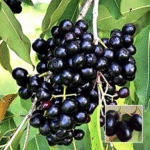
Black Jamun, also known as Java Plum (Syzygium cumini), is a fast-growing evergreen tree native to the Indian subcontinent, long valued both for its deep purple-black fruit and its traditional use in Indian herbal remedies. Grafted varieties bring reliable, earlier fruiting compared to trees grown from seed.
Learn more about Syzygium cumini on Wikipedia.
Appearance & Flavour
The tree has glossy, dark green leaves and clusters of small, fragrant flowers that give way to oval fruit ripening from green through pink to a deep purple-black. The flesh is juicy with a distinctive tart-sweet flavour and a slightly astringent finish that fades as the fruit fully ripens.
Growing Conditions in India
Jamun is naturally well suited to Indian conditions, tolerating heat, humidity, and a range of soils with ease. It wants full sun and adapts to both dry and moderately wet conditions once established, making it one of the more forgiving fruiting trees in this catalogue.
Planting Guide
Allow 6-8 metres of space in open ground for this tree’s eventual broad canopy. Enrich the planting hole with organic matter, and stake young trees until well rooted.
Watering & Feeding
Water regularly while young, then reduce frequency as the tree matures, since established jamun tolerates dry spells reasonably well. Light feeding with organic compost a couple of times a year supports steady growth.
Pruning & Common Problems
Light annual pruning after fruiting keeps the canopy manageable. Jamun is generally trouble-free, with few serious pest or disease issues once established.
Harvest & Culinary Uses
Fruit is ready once it turns a deep purple-black and comes away easily from the stem. Eat fresh with a pinch of salt in the traditional way, or use in juices, sherbets, and preserves.
Frequently Asked Questions
How soon does a grafted Black Jamun tree fruit?
Typically within 3-4 years of planting, considerably sooner than a seed-grown tree.
Is jamun easy to grow in Indian conditions?
Yes, it is naturally well adapted to Indian heat and humidity and needs relatively little special care.
What is jamun traditionally used for besides fresh eating?
It is widely used in juices, sherbets, and traditional Indian home remedies.
Does jamun need a lot of space?
It grows into a substantial tree over time, so open-ground planting is best rather than a container.
Related Plants You Might Like
Explore more Jamun Plants from Green Glow Nursery, including the White Jamun – Exotic Plants and Thai Black Jamun – Exotic Plants.
Complete Care Overview
Getting the basics right matters more than any single trick, and it starts with what you plant Black Jamun Plant into. Plain garden soil compacts hard inside a container and starves the roots of the air they need, which is one of the most common reasons a new plant struggles in its first year. A proper blend of soil, compost, cocopeat and coarse sand drains freely while still holding enough moisture between waterings. Our potting mix guide has three ready-to-use recipes, plus guidance on pit preparation if you are planting Black Jamun Plant directly into the ground.
Watering habits should shift with the seasons rather than stay on a fixed schedule — more often in peak summer heat, far less once growth slows in the cooler months. Overwatering, not underwatering, is one of the most common ways a healthy container plant is lost, since waterlogged roots can rot before the leaves show any obvious sign of stress. Checking the soil a couple of inches down before watering again, rather than watering on autopilot, is a habit worth building early. Our watering guide walks through a simple routine that applies across our full range of fruit plants.
Feed lightly and regularly rather than heavily and rarely: a balanced organic feed every few weeks during the growing season supports steady growth without the salt build-up in the pot that comes from overfeeding. Skip feeding altogether once growth slows for the year, since the plant cannot use nutrients it is not actively growing with. See our fertiliser guide for a season-by-season feeding plan that works for Black Jamun Plant and the rest of our catalogue alike.
The monsoon months call for extra attention to drainage, since a pot that stays waterlogged for even a few days can cost you Black Jamun Plant through root rot. Moving pots under a slight overhang and keeping an eye on standing water after heavy rain goes a long way. Our monsoon care guide has the full checks worth running before the rains arrive.
Why Choose Black Jamun from Green Glow Nursery
A hardy, classic Indian fruit tree with a well-loved flavour. Every plant is nursery-raised and delivered across India with our standard health guarantee.
What's inside the Box?
- 1 live plant, root ball intact
- Nursery bag with growing media
- Care and planting instructions
You may also like
 26% OFF
 36% OFF
 44% OFF
 29% OFF
Customer Reviews
 Morsalin Ahmed
Very healthy plants
