
A single pair of mangoes once sold for $3,744 at a wholesale auction in Japan — and that was not a one-off. Miyazaki mangoes, nicknamed Taiyo no Tamago, or “Egg of the Sun,” regularly fetch up to $4,000 a pair when the best of the season’s crop goes under the hammer. That answers the question everyone asks — why is Miyazaki mango so expensive — and the same variety is now available as a grafted plant you can grow at home in India.
What Is Miyazaki Mango?
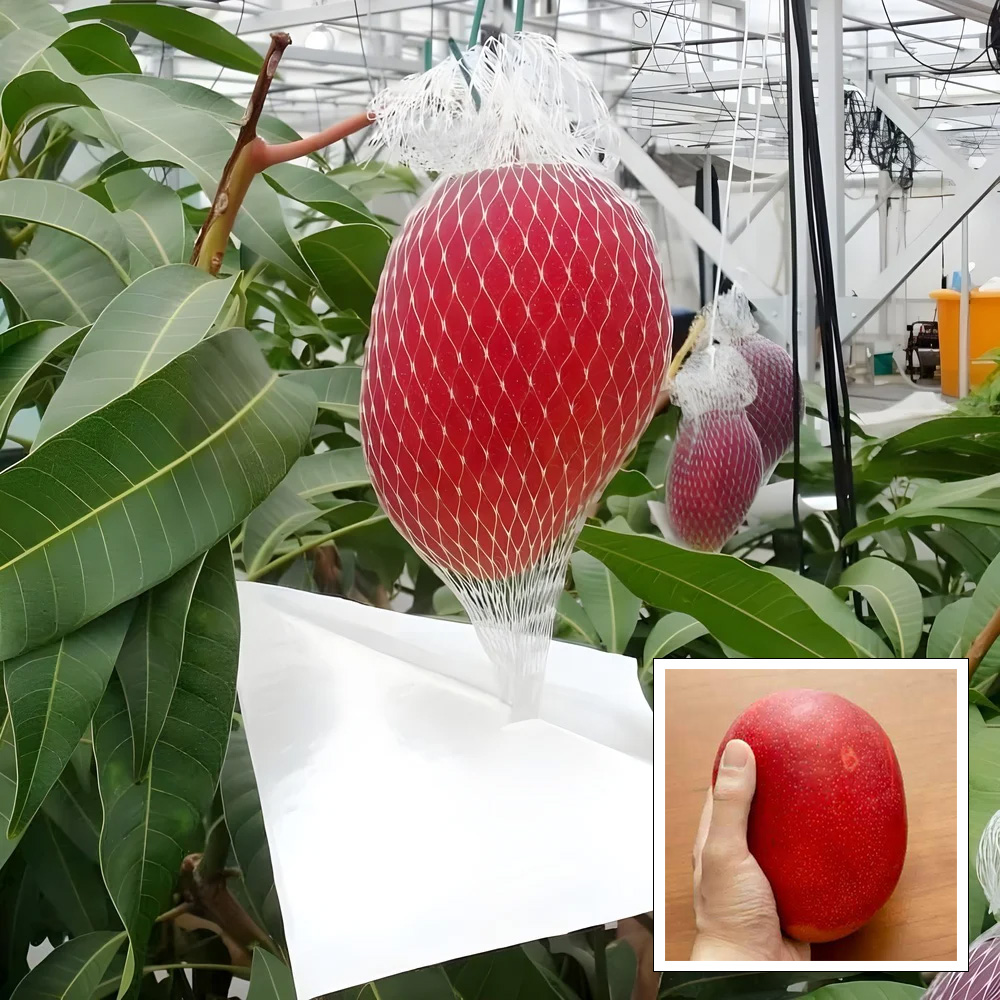
Miyazaki mango is a premium cultivar of Mangifera indica grown in Miyazaki Prefecture on Japan’s southern island of Kyushu. Its nickname, Taiyo no Tamago, refers to its deep, glowing crimson-red skin, which local farmers compare to an egg lit up by the sun. Not every mango grown in the prefecture earns that name, though — only fruit that clears a strict set of standards is allowed to carry it.
The Standards Behind the Name
To be sold as Taiyo no Tamago, a mango must weigh at least 350 grams, contain at least 15% sugar content, and be close to flawless in shape, colour, and skin condition. Most mangoes never clear all three bars at once, which is exactly why the ones that do command such a premium.
Why Is Miyazaki Mango So Expensive, Exactly?
The cost comes from how deliberately each fruit is grown, not just its rarity. Farmers limit each branch to just three or four fruits so the tree puts its energy into fewer, larger, sweeter mangoes rather than an average-sized crop. Some growers even use small mirrors to reflect extra sunlight onto the fruit and even out its colour.
The most distinctive step, though, is netting: each mango is wrapped in a small net while still on the tree, so it can be caught the moment it falls naturally at full ripeness rather than being cut early and ripened off the branch. It is the same detail visible in the photo above — the fruit hangs cradled in its net right up to the point of harvest, exactly as it does on the grafted Miyazaki mango plant we grow at our own nursery.
Can You Grow Miyazaki Mango in India?
Yes, and you do not need Japan’s climate to do it. A grafted Miyazaki mango plant carries the same genetics as the parent tree, so it produces true-to-variety fruit rather than the gamble of growing from seed. In India’s warm growing regions, a grafted plant typically fruits within two to three years, wants full sun and well-drained soil, and is cared for much like any other grafted mango once established.
What an Indian home grower gets is genetically the same tree, so the fruit looks and tastes like the Japanese original. What differs is scale and ceremony, not the variety itself — Japan’s auction system exists to sort and reward the very best individual fruit, not to change what the tree is capable of producing anywhere else.
Frequently Asked Questions
Is Miyazaki mango really the most expensive mango in the world?
It is widely considered one of the most expensive, with auction-grade pairs regularly selling for thousands of dollars in Japan. The cost of growing one yourself, by contrast, is no different from growing any other grafted mango variety.
Does a home-grown Miyazaki mango taste the same as the Japanese original?
A grafted plant carries identical genetics to the parent tree, so the fruit is the same variety. Japan’s auction system adds extreme selection for size, sugar content, and appearance on top of that — a home-grown fruit will still taste like a true Miyazaki mango even if a given piece does not hit every auction-grade benchmark.
How long does a grafted Miyazaki mango plant take to fruit?
Typically two to three years, in line with other grafted mango varieties, given full sun and well-drained soil.
Is Miyazaki mango hard to grow in Indian conditions?
No. It adapts to India’s warm growing regions like other mango varieties and needs the same standard care: full sun, well-drained soil, and regular watering while young.
If the story behind it has you curious to grow one yourself, our grafted Miyazaki mango plant is raised and shipped from our own nursery, with the same health guarantee we back every plant with.
Sources: Atlas Obscura on Taiyo no Tamago auction records, and Wikipedia for background on mango cultivation.