
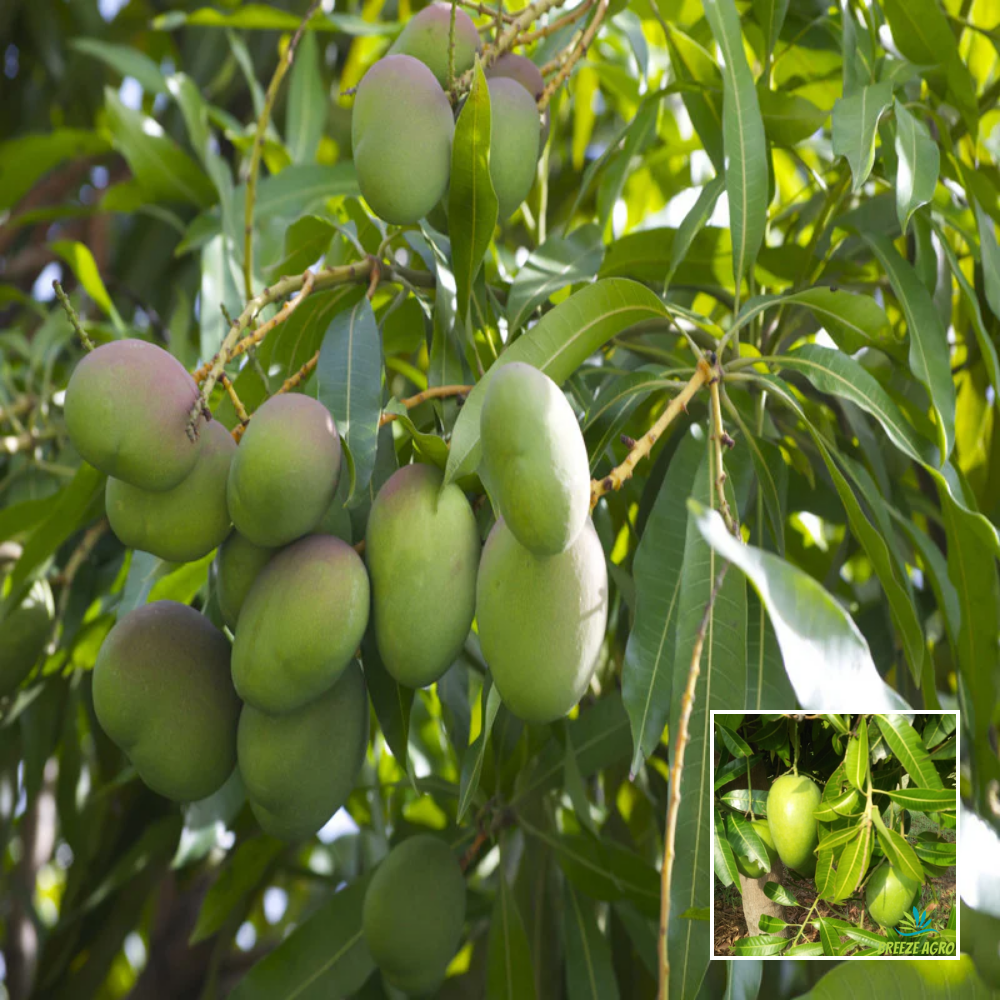
Neelam Mango – Grafted Plant
100+ bought last month
₹495.00 Original price was: ₹495.00.₹440.00Current price is: ₹440.00.
Free Shipping
10-Day replacement
Delivers in 7-Days
Get 10% off on a purchase of ₹1500+
Get 20% OFF on a purchase of ₹3500+
We assure you to replace damaged or lifeless plant for free.
It is grafted!
Assured fruiting within 12-15 months.
Product description
If you’ve ever bitten into a Neelam mango, you already know why people get obsessive about this variety. The flesh is saffron-orange, almost completely fiber-free, and sweet in a way that feels almost too good to be true. It’s a late-season fruit too — ripening from June through July, long after most other varieties are done — which makes it something of a garden treasure for anyone who can’t get enough of mango season.
The name “Blue Mango” comes from the faint purple-blue blush the skin takes on as it ripens. It’s subtle, but once you know what to look for, it’s unmistakable.
Getting the Growing Conditions Right
Neelam is a tropical tree at heart, happiest when temperatures sit somewhere between 24°C and 30°C day to day. That said, once it’s properly established, it can handle a brief dip to around -1°C without serious damage — just don’t let a young sapling face frost without some protection. What’s nice about this variety is that it’s not particularly fussy about humidity. It does just as well near the coast as it does in drier inland gardens, as long as the basics are covered.
And those basics start with sunlight. You really do need 8 to 10 hours of direct sun daily. Don’t try to tuck this tree into a shady corner — it won’t flower well, and the fruit production will suffer for it. Pick the sunniest spot your garden has to offer.
For soil, deep and well-draining is the goal. Loamy or sandy loam with a pH between 5.5 and 7.5 works well. Heavy clay is a problem, and waterlogged ground is essentially a death sentence for mango roots. If your drainage isn’t great, the practical fix is to build up a raised mound — around two to three feet high — before planting.
Standard trees need roughly 10 to 12 meters of space between them. If you’re working with a smaller garden and dwarf varieties, you can bring that down to 3 or 4 meters, though you’ll need to keep up with pruning to manage the size.
Planting and Early Care
The monsoon season — July through August — is the ideal window for getting a Neelam in the ground. Dig a generous pit (about 1m x 1m x 1m), and before you refill it, mix the excavated soil with 25 to 30kg of well-rotted compost or cow manure, plus around 2kg of bone meal or superphosphate. That nutrient-rich backfill gives roots something to work with right from the start.
One thing a lot of people overlook: Neelam responds really well to cross-pollination. If you can plant it near a Dashehari or Alphonso, you’ll almost certainly get a better fruit set. It’s worth planning for if you have the space.
Grafted trees will start bearing fruit within 3 to 4 years. Peak production usually kicks in somewhere around the 10 to 15 year mark, when mature trees can reliably yield 150 to 200kg of fruit in a good season.
For pruning, the early years are about shaping — training the tree to develop 3 or 4 solid main branches rather than letting it grow wild. After that, it’s mostly maintenance: clearing out dead wood and thinning crowded sections after each harvest so air and light can get through properly.
Watering — The Detail That Makes or Breaks It
Young trees in their first three years need consistent moisture. Every 2 to 3 days during dry spells is a reasonable rhythm, with a deep soak of around 60 liters weekly in clay-heavy soils (less in sandy ground). The goal at this stage is getting a strong taproot established, so don’t let the soil dry out completely between waterings.
Once the tree is established, things shift. You’ll want to increase to around 120 liters weekly during hot weather, but — and this is important — stop irrigating entirely for about two months before flowering season, which typically falls in October to November. Deliberately stressing the tree during this window is what triggers heavy blooming. It feels counterintuitive, but it works.
When fruit starts developing, resume moderate watering and keep things even. One mistake that trips up a lot of growers: overwatering as fruit approaches maturity. Back off slightly in the final stretch before harvest, or you risk splitting.
Feeding the Tree
Young trees do best with a nitrogen-rich fertilizer applied monthly through the growing season. As the tree matures and the focus shifts from leaf growth to fruit production, switch to a low-nitrogen, high-potassium formula — something in the range of 0-0-22 works well. It makes a noticeable difference in both flowering and fruit quality.
Beyond the main fertilizer schedule, an annual spray of micronutrients — zinc, boron, and iron especially — keeps growth vigorous and helps prevent the kind of subtle deficiencies that aren’t always obvious until they’ve already affected a harvest.
Why Green Glow Nursery’s Neelam?
Every sapling we supply is certified grafted stock — true-to-type genetics, not seed-grown, which means you know exactly what you’re getting. Trees come with established root systems and have been inspected for disease resistance, particularly anthracnose and powdery mildew. Detailed care instructions come with every purchase, so you’re not starting from scratch.
Order your Neelam today — there’s nothing quite like eating a mango you grew yourself.
Reviews
There are no reviews yet.